
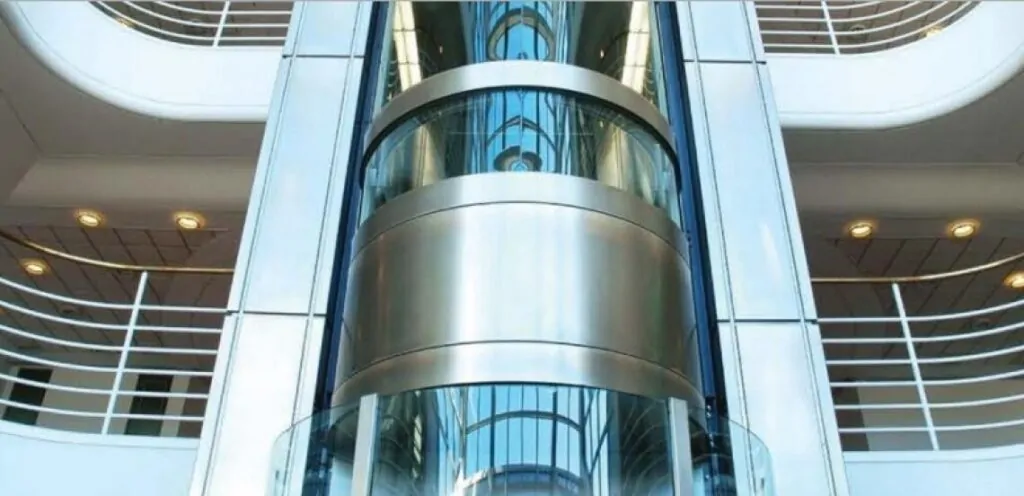
Introduction: The Most Overlooked Cost in Every Syrian Panoramic Lift Project
A luxury residential tower in Damascus installs a USD 85,000 panoramic glass elevator — a signature architectural feature visible from every floor of the building’s atrium. Eighteen months later, the glass panels are hazed with a thin film of construction dust that was never properly cleaned after installation. One of the landing doors squeaks on every opening. The cabin lighting flickers because a connection worked loose during Syria’s summer heat expansion cycles. And nobody has lubricated the guide rails since commissioning.
The panoramic lift — precisely because it is glass and therefore entirely visible — is the one elevator type where deferred maintenance is immediately apparent to every person who passes it. A dusty, scratched, or mechanically troubled panoramic lift does not just inconvenience occupants; it visually undermines the quality of every other premium specification decision in the building around it. The USD 85,000 architectural statement becomes a USD 85,000 reminder of neglect.
Panoramic lift maintenance in Syria requires a different discipline from standard elevator maintenance — because it combines the technical complexity of a precision mechanical system with the care requirements of a premium glass installation, all in an environment that is significantly more demanding than the conditions any international maintenance schedule assumes. This guide covers every dimension of that discipline: mechanical maintenance, glass care, electrical systems, Syria-specific protocols, and the realistic cost of doing it right.
Hard System maintains panoramic lifts across Syria’s premium residential, commercial, and hospitality sectors. Everything in this guide reflects direct maintenance experience — not theory applied from international manuals.
Section 1: Why Panoramic Lift Maintenance Is Different from Standard Elevator Maintenance
A panoramic lift shares the core mechanical and electrical systems of a conventional elevator — drive motor, guide rails, control board, safety systems — and requires all of the same preventive maintenance. But it also has a set of maintenance requirements that are unique to glass elevator systems, and that are frequently absent from standard elevator maintenance contracts in Syria.
1.1 Glass Surface Maintenance — A Separate Discipline
The glass panels of a panoramic lift are not self-maintaining surfaces. They accumulate dust, fingerprints, water marks, construction residue, and in coastal Syrian locations, salt deposits — at a rate that makes their maintenance schedule as important as the mechanical service schedule. Without regular professional glass cleaning, the panels develop surface hazing that is initially invisible close-up but dramatically apparent from a distance — turning the transparent architectural feature into a foggy partition.
Glass surface maintenance is not just aesthetic. Scratched or etched glass has reduced light transmission, altered safety properties if the scratch penetrates the tempered surface treatment, and is far more expensive to clean with recovery products than to maintain preventively with the correct protocol from the outset. The cost of professional glass cleaning every 4 weeks is USD 80–200 per visit. The cost of glass panel replacement due to irreversible surface degradation is USD 2,500–8,000 per panel.
1.2 Structural Connection Monitoring
The glass shaft structure of a panoramic lift uses mechanical connections — bolts, brackets, spider fittings, or frame joints — that are exposed to temperature cycling, vibration, and in some Syrian locations, seismic micro-tremors. These connections require periodic inspection and re-torquing to maintain the structural integrity of the glass shaft. A bolt that has worked loose due to thermal expansion cycling in a Syrian summer can allow glass panel movement that creates an audible tick or rattle — and, if not addressed, a misalignment that affects the visual appearance of the entire installation.
1.3 Drive System Noise Management
Panoramic lifts are typically installed in locations where they are visually prominent — atria, entrance halls, stairwells — where ambient noise levels are lower than in back-of-house service areas. Any increase in drive system noise (bearing wear, lubrication degradation, guide rail roughness) is immediately perceptible to occupants and observers in these quiet, high-quality environments. The noise management standard for panoramic lift maintenance in luxury buildings is significantly more exacting than for service elevators — a noise level that would be acceptable in a conventional shaft becomes conspicuous and complaint-generating in a glass lift adjacent to a luxury lobby.
1.4 Electrical System Sensitivity
The LED lighting systems, touch-sensitive control panels, and smart home integration electronics in a modern panoramic lift are sensitive to the voltage fluctuations and humidity conditions common in Syrian buildings. Condensation on glass surfaces can create moisture in adjacent electrical components if the cabin is not properly ventilated. Power spikes can damage LED driver circuits and control panel displays in ways that are visible to every user — a flickering ceiling light or a frozen control panel screen in a premium glass elevator is a quality failure that management cannot ignore.
Section 2: The Complete Syria-Calibrated Panoramic Lift Maintenance Schedule
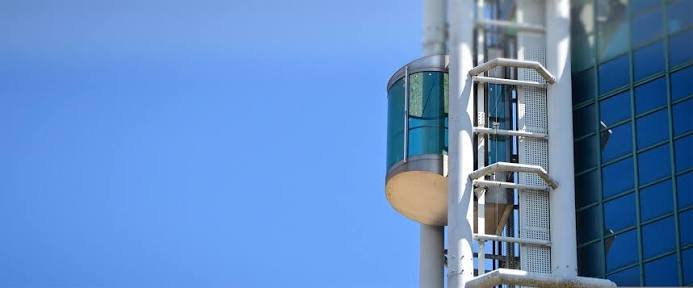
The following maintenance task cards document the complete preventive maintenance programme for a panoramic lift in Syria — organised by service interval and calibrated for Syria’s specific environmental conditions, not European defaults.
| [WEEKLY] Facility Staff Visual Check |
| • Glass cabin and shaft panel inspection — look for new fingerprints, marks, or surface damage • Cabin interior check — floor condition, handrail surface, control panel display • Landing door operation check — listen for any new squeaks, resistance, or alignment change • Cabin lighting check — confirm all LED fixtures operating, no flickering • Emergency stop button check — visually confirm unobstructed and correctly marked • Log any observations in the facility maintenance record Syria-Specific Note: In Syrian commercial and hospitality buildings, weekly glass surface spot-cleaning of fingerprint concentrations on handrails and low glass panels should be added to the facility housekeeping schedule — using only approved glass-compatible cleaning products. Never use standard window cleaner sprays that contain ammonia on anti-reflection or low-e coated glass panels. |
| [MONTHLY] Full Preventive Engineering Service Visit |
| • MECHANICAL — Guide rail lubrication: clean existing lubricant, inspect rail surface, apply specification lubricant • MECHANICAL — Drive chain or belt inspection: tension check, surface condition, elongation measurement if traction • MECHANICAL — Motor thermal check: measure operating temperature, clean cooling fins • MECHANICAL — All shaft structural connections: torque check on bolts, inspect spider fittings or frame joints • MECHANICAL — Landing door mechanism: adjust if any resistance, lubricate hinges and rollers • MECHANICAL — Safety edges on doors: functional test on every landing • ELECTRICAL — Supply voltage measurement at motor terminals: log L1, L2, L3 • ELECTRICAL — AVR performance check: verify output voltage stability • ELECTRICAL — UPS emergency lowering: test activation and lowering sequence • ELECTRICAL — LED lighting inspection: check all cabin and any shaft lighting • ELECTRICAL — Control panel display check: confirm correct operation and readability • GLASS — Full professional glass cleaning: cabin interior, shaft panels (accessible surfaces), landing doors • GLASS — Glass surface condition assessment: note any scratches, chips, or surface hazing • SAFETY — Emergency stop test at all landings • SAFETY — Overload sensor test • DOCUMENTATION — Service report with all measurement values and glass condition photographs Syria-Specific Note: Monthly service is the Syria minimum for panoramic lifts — not quarterly. The combination of dust, thermal cycling, and power instability in Syria creates mechanical and electrical stress rates that make quarterly maintenance inadequate. Hard System’s field data shows that panoramic lifts on monthly contracts in Syria have 4× fewer unplanned stoppages than equivalent lifts on quarterly contracts. |
| [QUARTERLY] Comprehensive Technical and Glass Inspection |
| • Full mechanical measurement survey: guide rail alignment, cabin level at all landings, door alignment • Glass panel full structural inspection: check all fixings, seals, and panel edges for damage or movement • Motor winding insulation resistance test (megohm test): compare to previous quarter • VFD health check: DC bus voltage measurement, fan operation, fault history review • Smart home integration test (if fitted): verify all functions operative and communication stable • Full glass panel cleaning including upper shaft sections (requires access equipment) • Glass sealant inspection: check silicone seals at all panel joints for cracking or separation • Drainage check: if panoramic shaft has internal drainage provision, verify clear • Condensation check: inspect for signs of moisture infiltration at any electrical enclosure • Anti-reflection or low-e coating condition assessment: photograph and compare to baseline • Component condition register update: current ratings for all major mechanical and glass components Syria-Specific Note: The quarterly glass sealant inspection is a Syria-specific addition to the standard maintenance programme. Syria’s temperature cycling — from near-freezing winter nights to 42°C+ summer days — stresses silicone sealants at glass panel joints more severely than European climates. A failed sealant joint allows moisture and dust infiltration that discolours the panel edges from the inside — a defect that is not repairable without panel removal and replacement. Catching sealant failures at the quarterly inspection prevents a USD 4,000–8,000 remediation. |
| [SEMI-ANNUAL] Major Structural and Electrical Assessment |
| • Full structural connection retorque: all bolts and fixings to specified torque • Glass panel structural load test: confirm all panels carrying correct loads at designed fixings • Drive system oil or grease changeover (as specified for drive type) • Motor bearing play measurement: compare to service limit • All electrical terminal connection retorque: motor, control board, VFD, AVR • Full cabin interior refurbishment: polish stainless surfaces, condition leather or fabric panels if fitted • Handrail surface assessment: condition report on rubber or leather covering • Control panel calibration: confirm all button functions, display brightness, and response time • Glass anti-reflection coating refresher (if applicable): apply UV-protective glass treatment • Full photographic condition survey: all glass panels, structural connections, cabin interior • Forward maintenance plan update: projected component replacement needs for next 12 months Syria-Specific Note: The semi-annual UV-protective glass treatment is a Syria-specific requirement. Syria’s high UV radiation intensity degrades unprotected glass coatings and can cause yellowing of any polymer interlayers or frame sealants over a 3–5 year horizon. A professional UV-protective treatment applied every 6 months significantly extends the visual life of the glass specification — particularly important for ultra-clear low-iron glass where any yellowing is immediately apparent. |
| [ANNUAL] Full Engineering Inspection and Certification |
| • Full load test: rated passenger load for 30 cycles, all safety systems active • Braking distance measurement under full load • Overspeed governor test • Complete structural glass inspection with torque verification of all primary structural connections • Glass panel condition full assessment: any panels requiring replacement flagged with cost estimate • Motor full electrical test: winding resistance, insulation, bearing dimensions • Control board diagnostic: full fault history review, firmware version check • Regulatory inspection documentation: prepare technical file for authority submission • 10-year glass maintenance plan update: project glass panel replacement schedule based on current condition • Client presentation: annual findings report with photographic evidence and 12-month forward plan • Parts criticality review: identify any components within 18 months of end-of-life, order replacements Syria-Specific Note: Syria’s regulatory environment for vertical transportation is evolving. Hard System prepares annual inspection documentation that meets current Syrian regulatory requirements and — for projects with international brand or investor standards — complies with EN 81-1/81-2 European elevator safety standards. Maintaining annual regulatory compliance documentation is increasingly required for commercial building occupancy permits in Syrian major cities. |
Section 3: The Glass Care Protocol — Syria-Specific
The glass care component of panoramic lift maintenance is the most distinctive aspect of the programme — and the most frequently underestimated. The following protocol is calibrated for Syrian environmental conditions and covers every glass surface type encountered in panoramic lift installations.
3.1 Approved Cleaning Products for Syrian Panoramic Lifts
The choice of cleaning product is the single most consequential decision in glass panel maintenance. Using the wrong product — even once — can permanently damage anti-reflection coatings, low-e coatings, or the tempered glass surface treatment. The following hierarchy applies to all panoramic lift glass surfaces in Syria.
| Glass Surface Type | Approved Cleaner | Application Method | What to NEVER Use |
| Standard tempered safety glass | pH-neutral glass cleaner, no ammonia | Microfibre cloth, no abrasive | Ammonia-based window cleaners, steel wool, abrasive pads |
| Ultra-clear low-iron glass | pH-neutral, ammonia-free, lint-free cloth | Soft microfibre, horizontal strokes | Any alkaline cleaner, acidic descaler, squeegee with hard blade |
| Low-e coated glass | Manufacturer-specified coating cleaner ONLY | Follow manufacturer protocol exactly | Any non-specified cleaner — coating damage is irreversible |
| Anti-reflection coated glass | AR-compatible cleaner (supplied by Hard System) | Soft cloth, gentle circular motion | Standard window cleaners — strip the AR coating within 6 uses |
| Laminated safety glass edges | Dry microfibre only | Wipe edge gently — no liquid on laminate edge | Any liquid at exposed laminate edge — causes delamination |
3.2 Cleaning Frequency for Syrian Climate Conditions
Syria’s dust environment requires more frequent glass cleaning than international maintenance programmes recommend. The following frequency schedule applies to panoramic lift glass surfaces in Syrian urban and coastal environments.
- Cabin interior glass panels: weekly spot-clean (fingerprints, marks), monthly full clean
- Shaft exterior glass panels (accessible from floor level): monthly full clean
- Shaft upper panels (requiring access equipment): quarterly professional clean
- Landing door glass panels: weekly spot-clean, monthly full clean
- Handrail glass or chrome surfaces: daily wipe in commercial applications, weekly in residential
- Coastal Syrian locations (within 5km of sea): increase all frequencies by 50% due to salt deposit acceleration
3.3 Scratch and Damage Response Protocol
When a glass scratch or chip is discovered, the response protocol determines whether the damage is cosmetic or structural. Hairline surface scratches in the glass coating (not penetrating the tempered surface) can be assessed by Hard System’s glass specialist and may be polished out with professional glass polishing compounds. Scratches that penetrate the tempered surface treatment require panel assessment — the structural integrity of the panel must be evaluated before continued operation.
Any chip or crack in a glass cabin panel or structural shaft panel is a potential safety issue that must be assessed before the lift operates with passengers. Hard System’s emergency glass assessment service is available within 24 hours for any crack or chip reported in a contract client’s panoramic lift.
Section 4: Syria-Specific Maintenance Challenges and Solutions
4.1 Power Supply Management
Syria’s power grid delivers voltage fluctuations that are specifically damaging to the sensitive electronics in modern panoramic lifts — LED driver circuits, touch-sensitive control panels, smart home interface modules, and VFD systems. Monthly voltage logging at the motor supply terminals tracks the power quality trend over time. If recorded voltages begin to drift below 350V or above 410V regularly, AVR recalibration or replacement is triggered before component damage occurs.
UPS emergency lowering systems require monthly functional testing — not annual. In Syria’s power interruption environment, a UPS that has not been tested and maintained is not a reliable safety system. Monthly UPS test in Hard System’s panoramic lift protocol activates the emergency lowering sequence and verifies that the cabin reaches the nearest floor within 60 seconds on battery power.
4.2 Summer Thermal Management
Syrian summer ambient temperatures create thermal expansion and contraction cycles in the panoramic lift’s structural glass connections, guide rails, and cabin components that are more pronounced than in any European market. During summer, monthly service visits must include a thermal condition assessment — checking that structural connection torque has been maintained after the first thermal cycling season, that guide rail thermal expansion joints are clear, and that the cabin ventilation system is operational and unobstructed.
Panoramic lift machine rooms or control enclosures in Syrian buildings must maintain ambient temperature below 40°C for reliable operation. Hard System’s summer maintenance protocol includes a control enclosure temperature verification at every monthly visit during May through September — with recommendations for additional ventilation or air conditioning if temperatures exceed 38°C.
4.3 Dust Infiltration Management
Fine dust infiltration into the panoramic lift’s mechanical and electrical systems is the most consistent maintenance challenge in Syrian operations. Monthly cleaning of motor cooling fins prevents thermal shutdown from blocked cooling. Quarterly compressed-air purging of the control board enclosure prevents dust accumulation on circuit board components. Guide rail lubrication with dust-resisting lubricant reduces the abrasive paste that forms when standard lubricant mixes with Syrian ambient dust.
4.4 Condensation in Glass Shafts
Syrian winter nights — particularly in Damascus and mountain regions — can create condensation on cold glass shaft surfaces when the building interior is heated. This condensation, if it accumulates at the base of the shaft or in electrical enclosures, creates moisture-related failures: guide rail surface rust, lubricant contamination, and moisture ingress into landing door electrical mechanisms. Hard System’s winter maintenance protocol includes a condensation check at every monthly visit during November through March — with drain point verification and moisture barrier assessment where required.
Section 5: Panoramic Lift Maintenance Costs in Syria — What to Budget
Panoramic lift maintenance costs in Syria are higher than standard elevator maintenance costs for the same capacity — because of the additional glass care component, the higher-precision requirements for structural connection maintenance, and the more intensive electrical system monitoring required by Syria’s power conditions. The following cost guide documents realistic maintenance budgets for Syrian panoramic lift operations.
| Service Component | Annual Cost (USD) — Residential | Annual Cost (USD) — Commercial / Hotel | Frequency |
| Full preventive engineering service | $1,800–$3,200 | $2,800–$4,800 | Monthly |
| Professional glass cleaning (all surfaces) | $1,200–$2,400 | $2,400–$4,800 | Monthly + quarterly upper panels |
| Structural connection inspection & retorque | Included in semi-annual | Included in semi-annual | Semi-annually |
| AVR & UPS system service | $300–$600 | $400–$800 | Semi-annually |
| UV glass treatment / coating refresher | $400–$800 | $600–$1,200 | Semi-annually |
| Annual regulatory inspection and certification | $800–$1,500 | $1,200–$2,500 | Annually |
| Emergency callout allowance (budget) | $500–$1,000 | $800–$1,500 | As needed |
| TOTAL ANNUAL MAINTENANCE BUDGET | $5,000–$9,500 | $8,200–$15,600 | Full programme |
| The most common maintenance budget mistake for Syrian panoramic lift owners is budgeting only the mechanical service cost (USD 1,800–3,200) and excluding the glass care, structural monitoring, and electrical protection components. The full programme cost is 2.5–3× higher than the mechanical service alone — but it is the only budget that actually protects the visual quality and operational reliability of the glass elevator investment. |
5.1 Cost of NOT Maintaining — The Syrian Panoramic Lift Penalty Scale
| Neglected Maintenance | Typical Consequence | Remediation Cost (USD) | Preventive Cost (USD/yr) |
| Glass panel cleaning | Surface hazing, reduced transparency | Panel replacement: $3,000–$8,000/panel | $1,200–$2,400 |
| Structural bolt retorque | Glass panel movement, cracking risk | Emergency glass repair: $5,000–$15,000 | Included in semi-annual |
| AVR maintenance | Control board failure from voltage spike | Board replacement: $4,000–$9,000 | $300–$600 |
| UPS testing | Passenger trapped in glass cabin — power outage | Reputation/liability: unquantifiable | Included in monthly |
| Guide rail lubrication | Audible noise in premium space, rail wear | Rail replacement: $8,000–$18,000 | Included in monthly |
| Sealant inspection | Moisture infiltration, panel edge staining | Panel removal and reseal: $4,000–$10,000 | Included in quarterly |
| Motor bearing monitoring | Motor failure, unplanned shutdown | Motor replacement: $5,000–$12,000 | Included in semi-annual |
Section 6: How to Choose a Panoramic Lift Maintenance Provider in Syria
The panoramic lift maintenance market in Syria includes general elevator service companies, some of which offer panoramic lift maintenance without the glass-specific training or equipment to service these systems correctly. The following criteria separate a qualified panoramic lift maintenance provider from a general elevator contractor who claims to cover panoramic lifts.
- Glass specialist capability: does the provider have trained glass handling technicians and carry approved glass cleaning products specific to the coatings on your panels?
- Structural glass experience: can the provider demonstrate experience with spider fitting inspection, structural glass bolt torque verification, and glass sealant assessment?
- Monthly service commitment: does the provider offer and genuinely deliver monthly service visits, or do they default to quarterly despite the Syrian-specific maintenance requirements?
- Electrical protection capability: does the provider measure and log supply voltage at every visit, and do they hold AVR and UPS testing equipment?
- Glass damage response: what is the provider’s documented response time for a cracked or chipped glass panel report — and do they have access to replacement panels for your specific glass specification?
- Written service reports with glass condition photographs: every monthly visit must produce a photographic record of glass panel condition, not just a task completion checklist
- In-country spare parts: does the provider hold critical parts for the drive system and control board of your specific lift brand — or will repairs require a 4–8 week international order?
| Hard System is the only vertical transportation service provider in Syria that offers a combined mechanical-and-glass maintenance programme for panoramic lifts — with monthly service visits, professional glass cleaning, structural connection monitoring, AVR/UPS testing, and in-country parts availability for all brands we maintain. Contact us at hard-sy.com to discuss your panoramic lift maintenance requirements. |
Frequently Asked Questions (FAQ)
Q1: How often should a panoramic lift in Syria be serviced?
Monthly preventive maintenance visits are the minimum appropriate service frequency for a commercial panoramic lift in Syria. Monthly service covers mechanical lubrication, safety system testing, electrical health checks, and professional glass cleaning. Quarterly and semi-annual visits add structural connection inspection, deeper glass assessment, and electrical system measurement surveys. Annual visits include load testing and regulatory certification. Residential panoramic lifts with lower cycle rates may be adequately served by monthly mechanical service with glass cleaning every 4–6 weeks — which Hard System treats as equivalent to a monthly programme.
Q2: Can I use standard window cleaning products to clean my panoramic lift glass panels?
No — and this is the most common and most damaging maintenance mistake in Syrian panoramic lift care. Standard window cleaners typically contain ammonia or alkaline compounds that strip anti-reflection and low-e coatings from premium glass panels in as few as six applications. Once a coating is stripped, the glass must be re-treated by the manufacturer or replaced — at a cost of USD 1,500–4,000 per panel for re-treatment or USD 3,000–8,000 per panel for replacement. Hard System provides an approved cleaning product list at installation and supplies approved products as part of our maintenance contract.
Q3: What happens if one of my panoramic lift glass panels is scratched or chipped?
Contact Hard System immediately and do not use the lift with passengers until an assessment has been completed. Hard System’s emergency glass assessment service responds within 24 hours for contract clients. The assessment determines whether the damage is superficial (polishable) or structural (requiring panel replacement). Surface scratches in glass coatings can often be polished out with professional glass polishing compounds at a cost of USD 200–500 per panel. Chips or cracks that penetrate the tempered surface require panel replacement and immediate suspension of passenger operation.
Q4: Does panoramic lift maintenance in Syria cost more than standard elevator maintenance?
Yes — typically 2–3× more than a standard elevator of equivalent capacity and floor count. The additional cost reflects the glass care component (professional cleaning equipment and approved products), the structural connection monitoring (requiring glass engineering knowledge beyond standard elevator technician training), and the more intensive electrical system monitoring required by Syria’s power conditions. However, the cost of comprehensive panoramic lift maintenance is always lower than the cost of remediation when any of the glass-specific maintenance components is deferred. The premium is an investment in preserving a premium asset.
Q5: My panoramic lift is making a clicking sound when the cabin passes a certain floor. What is causing it?
A clicking sound at a specific floor level in a panoramic lift typically indicates one of three causes: a glass panel structural connection that has worked loose and is allowing micro-movement as the cabin passes (requires immediate structural inspection), a guide rail joint that is slightly misaligned (requires rail adjustment), or a door mechanism component at that specific landing that is in contact with the cabin as it passes (requires door alignment adjustment). Hard System recommends treating any new noise in a panoramic lift as requiring investigation within 48 hours — not deferred to the next scheduled service.
Q6: How do I know if my AVR is still protecting my panoramic lift’s electronics?
An AVR that is not functioning correctly will show one of three signs: the output voltage displayed on its monitoring panel will show readings outside the normal range (typically 380V ±5%), the elevator will begin experiencing intermittent control board faults or resets that correlate with periods of low utility voltage, or the AVR’s fault indicator light will be illuminated. Hard System’s monthly maintenance service includes an AVR output voltage measurement and performance log — providing a documented trend that reveals AVR degradation before it causes control board damage. An AVR that is more than 5 years old should be assessed for replacement even if it appears to be functioning normally.
Q7: Can the maintenance of a panoramic lift void its manufacturer warranty?
Yes — if the maintenance is performed by an unauthorised provider or with incorrect products. Most panoramic lift manufacturer warranties specify that maintenance must be performed by an authorised service provider using manufacturer-approved lubricants, glass cleaning products, and replacement parts. Using a non-authorised provider — or using an ammonia-based glass cleaner that damages a coated panel — can void the warranty claim for the resulting damage. Hard System holds authorised maintenance status for all brands we install, and our maintenance contracts explicitly maintain manufacturer warranty compliance throughout the warranty period.
Q8: What is the expected lifespan of a panoramic lift glass panel in Syria?
Correctly specified, correctly installed, and correctly maintained panoramic lift glass panels have a lifespan of 20–25 years in Syrian conditions. This lifespan requires: laminated safety glass (not single-layer tempered), appropriate coating specification for the panel’s solar and UV exposure, a monthly cleaning programme with approved products, semi-annual UV protective treatment, quarterly sealant inspection, and immediate response to any chip or crack. Without this maintenance programme, the practical lifespan of glass panels in Syria’s UV and dust environment is 8–12 years before progressive surface degradation requires replacement.
Conclusion: Maintenance Is What Makes the Panoramic Lift Worth What You Paid For It
A panoramic lift is an investment in visual quality, spatial experience, and architectural excellence. It delivers that investment every day it operates clearly, quietly, and reliably — and it fails to deliver it on every day it operates with hazed glass, a squeaking door, or a flickering light that nobody has addressed. The difference between those two outcomes is a maintenance programme.
In Syria’s specific environment — with its dust, its heat, its power instability, and its UV intensity — the maintenance programme for a panoramic lift must be more rigorous than any international standard manual assumes. Monthly mechanical service, monthly professional glass cleaning, quarterly structural inspection, semi-annual UV glass treatment, and annual regulatory certification are not optional service levels. They are the minimum discipline required to protect a significant investment in a demanding environment.
Hard System provides the only comprehensive panoramic lift maintenance programme in Syria that covers both the mechanical engineering and the glass care components with equal professionalism. Our monthly visits are genuine, our glass cleaning uses approved products for every coating type, our structural inspections are performed by engineers with glass expertise, and our in-country parts inventory ensures that faults are resolved in days rather than months.
| Is Your Panoramic Lift Receiving the Maintenance It Deserves? Hard System offers a free panoramic lift maintenance audit for Syrian residential, commercial, and hospitality clients — assessing the current condition of your glass panels, structural connections, drive system, and electrical protection, and recommending a maintenance programme that protects your investment. |