
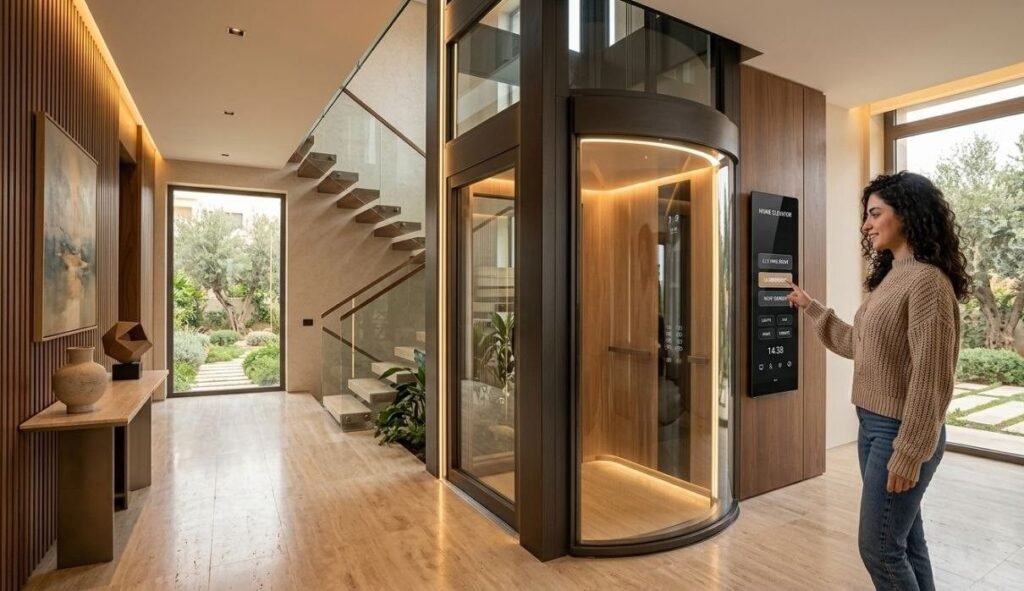
Imagine stepping into your Damascus home elevator and simply saying arrive at the third floor—no buttons, no waiting, just seamless vertical movement powered by artificial intelligence. Your elevator already knows you typically visit the gym at 6 AM, so it positions itself on your floor at 5:58. When Syrian power fluctuations hit, backup systems activate instantly while your smartphone receives detailed status updates. This is not science fiction—this is smart home elevator technology in 2026.
The global smart elevator market was valued at USD 20.4 billion in 2023 and is projected to grow at 6.8 percent CAGR through 2032. Connected IoT devices will surge from 18.8 billion in 2024 to 36.5 billion by 2029, fundamentally transforming how home elevators operate. Syrian homeowners, developers, and building managers now face critical decisions about which smart technologies justify investment despite local infrastructure challenges.
This comprehensive guide reveals the smart home elevator technologies reshaping residential vertical transportation in 2026. You will discover which innovations deliver genuine value in Syrian operating conditions, how AI and IoT transform elevator performance and safety, and which features address Syria-specific challenges like power reliability and connectivity constraints. Whether you are building a new luxury villa or upgrading existing properties, understanding these technology trends ensures your elevator investment remains cutting-edge for decades.
The Smart Elevator Revolution: Understanding the Transformation
Smart home elevators represent fundamental shifts beyond traditional mechanical systems. Modern elevators function as networked computing platforms that happen to move people between floors. Equipped with sensors, edge devices, and cloud connectivity, they continuously transmit operational, environmental, and usage data to central platforms for real-time analysis.
Between 2023 and 2025, digital controls, AI analytics, touchless interfaces, and regenerative technology have shaped vertical mobility. Operators benefit from reduced operating costs, enhanced comfort, and higher reliability. Users experience smart, hygienic, and intuitive operation that adapts to their specific needs and preferences.
Syrian smart elevator adoption faces unique considerations. Internet connectivity challenges, power quality issues, and part availability constraints require thoughtful technology selection. However, properly implemented smart systems actually mitigate many Syrian infrastructure challenges through predictive maintenance, power management, and remote diagnostics capabilities.
Core Smart Technologies Powering Modern Home Elevators
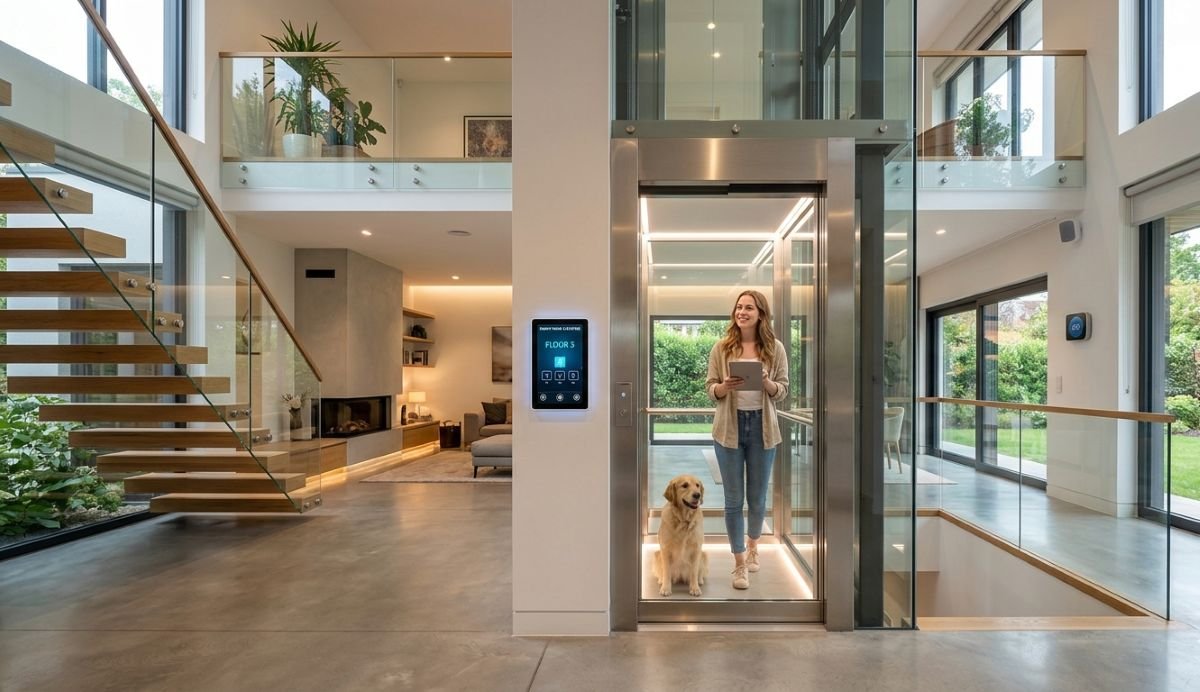
Understanding the technological building blocks enables informed decision-making about which features deliver value versus marketing hype. Smart home elevators integrate multiple sophisticated technologies working synergistically to create seamless user experiences while optimizing performance and safety.
Internet of Things (IoT) Integration
IoT connectivity forms the foundation of smart elevator systems. Sensors throughout the elevator continuously monitor dozens of parameters including door operation timing, motor temperature, vibration levels, power consumption, and passenger traffic patterns. This data streams to cloud platforms for analysis and long-term trend identification.
Demand for IoT in elevators in developed markets is forecasted to increase at 12.7 percent CAGR through 2034. Syrian installations benefit from IoT through remote monitoring capabilities that reduce dependence on frequent technician visits. Cloud-connected systems enable manufacturers to diagnose issues remotely, often resolving problems without dispatching service personnel.
Syrian connectivity challenges require hybrid architectures combining local processing with periodic cloud synchronization. Edge computing devices perform real-time decision-making locally while uploading summary data during reliable connectivity windows. This approach ensures elevator intelligence functions even when internet connections prove intermittent.
Artificial Intelligence and Machine Learning
AI algorithms transform raw sensor data into actionable intelligence. Machine learning models trained on millions of elevator operating cycles learn to distinguish normal operational variance from early-stage fault signatures. This enables predictive maintenance capabilities that identify potential failures weeks before breakdowns occur.
Industry data indicates approximately 80 percent of elevator failures are preceded by detectable anomaly signatures at least 7-21 days before actual breakdown events. AI monitoring captures these signals continuously, alerting maintenance teams with sufficient lead time to schedule planned repairs during low-traffic windows rather than emergency shutdowns.
Syrian smart elevator AI focuses on power quality prediction and optimization. Algorithms learn electrical grid patterns, predicting brownouts and voltage fluctuations. Elevators preemptively adjust operating parameters or activate battery backup before grid conditions deteriorate, preventing mid-trip shutdowns that strand passengers.
Predictive Maintenance Systems
Predictive maintenance represents perhaps the most valuable smart elevator capability for Syrian operators. Traditional maintenance follows fixed schedules or reacts to failures after they occur. Predictive systems continuously monitor equipment health, scheduling maintenance based on actual condition rather than arbitrary time intervals.
Machine learning paired with IoT sensors notifies technicians of potential issues before they manifest as failures. Systems monitor motor temperatures, door operations, and travel patterns, alerting maintenance teams when performance deviates from expected baselines. This proactive approach minimizes elevator downtime and optimizes equipment longevity.
Syrian part availability challenges make predictive maintenance especially valuable. Early fault detection allows procurement of replacement components well before failures force emergency shutdowns. Three-week advance warnings enable ordering parts from international suppliers without expensive air freight or prolonged downtime.
Touchless and Voice-Activated Controls
Smart elevators eliminate physical button contact through multiple interaction modalities. Voice recognition systems respond to natural language commands, allowing passengers to simply speak their destination floor. Smartphone apps enable elevator summoning and floor selection before passengers even reach the building entrance.
Facial recognition technology identifies frequent occupants and automatically delivers them to usual floors without any interaction. Biometric scanning using fingerprints or retinal patterns verifies identities and controls floor access, particularly valuable for Syrian villa owners prioritizing security. These systems integrate seamlessly with home security platforms.
Gesture recognition sensors detect hand movements, allowing elevator control through simple waving motions. This proves particularly useful when passengers carry packages or have mobility challenges. Syrian installations often combine multiple touchless modalities, ensuring redundancy when individual systems experience connectivity or power issues.
Destination Dispatch Systems
Destination control systems optimize elevator routing by grouping passengers traveling to similar floors. Instead of pressing up or down buttons, passengers indicate their destination floor on lobby touchscreens or smartphones. The system assigns them to specific elevators that minimize overall travel time across all passengers.
AI algorithms analyze real-time passenger movement data, adjusting elevator operations dynamically based on demand patterns. During peak hours, elevators prioritize high-traffic floors, reducing wait times significantly. Systems learn building-specific usage patterns, anticipating morning rushes, lunch periods, and evening departures.
Syrian residential applications see destination control benefits in large villa compounds or multi-family buildings. The technology proves especially valuable when Syrian extended families gather, automatically optimizing elevator service as multiple family members move between floors for meals, prayers, or social gatherings.
Smart Energy Management and Sustainability
Energy efficiency increasingly drives smart elevator technology development. Syrian electricity costs and supply reliability make energy optimization particularly valuable. Modern smart elevators incorporate multiple technologies reducing power consumption while maintaining performance.
Regenerative Drive Systems
Regenerative drives harvest energy from descending loaded elevators and ascending empty cabs, feeding power back into building electrical systems. This captured energy powers LED lighting, building systems, or other elevators. Intelligent control systems achieve up to 20 percent energy savings by optimizing motor efficiency and reducing idle time.
Syrian installations benefit doubly from regenerative systems. Energy savings reduce operational costs while decreasing demand on backup generators during power outages. The recovered energy extends generator runtime, maintaining elevator service longer during grid failures common in Syrian infrastructure.
Intelligent Standby and Sleep Modes
Smart elevators automatically reduce power consumption during inactive periods. LED cabin lighting dims or switches off when unoccupied. Ventilation systems operate at minimum levels. Control systems enter low-power states while maintaining safety monitoring and instant responsiveness when summoned.
AI algorithms learn building occupancy patterns, predicting low-usage periods and aggressively conserving energy while ensuring adequate service during active times. Syrian residential elevators often see dramatic energy reductions during midday hours when families are away and overnight when occupants sleep.
Solar and Renewable Energy Integration
Advanced smart elevators integrate with building solar panels or wind turbines, prioritizing renewable energy sources when available. Battery storage systems accumulate excess solar generation during peak sunlight hours, powering elevators during evening peak demand or grid outages.
Syrian solar potential makes renewable elevator power particularly attractive. Smart systems maximize solar utilization while maintaining grid connection as backup. This hybrid approach provides energy independence benefits without sacrificing reliability, critical given Syrian electrical infrastructure challenges.
Advanced Safety and Security Features
Smart technology dramatically enhances elevator safety beyond traditional mechanical safeguards. AI-powered systems provide layers of protection impossible with conventional elevators, while integration with building security creates comprehensive safety ecosystems.
Real-Time Performance Monitoring
Sensors continuously monitor critical safety parameters including brake function, door alignment, overload conditions, and emergency communication systems. Any deviation from safe operating parameters triggers immediate alerts to building managers and maintenance teams. Systems can automatically restrict elevator operation until issues are resolved.
Syrian installations benefit from remote monitoring that enables rapid response despite potential technician travel challenges. Cloud-connected systems alert manufacturers directly, allowing technical support teams to diagnose issues and guide local personnel through repairs remotely, minimizing downtime.
Intelligent Emergency Response
Smart elevators detect power failures instantly, automatically returning cabs to the nearest floor and opening doors to allow passenger exit. Battery backup systems ensure controlled emergency operation even during complete power loss. Two-way video communication enables trapped passengers to contact emergency services with visual context.
Earthquake detection systems recognize seismic activity, automatically moving elevators to designated safe floors and preventing new trips until building inspection confirms safety. This capability proves particularly valuable in Syria given regional seismic activity. Systems prioritize passenger safety over operational convenience.
Access Control and Security Integration
Smart elevators integrate with building security systems, restricting floor access based on user credentials. Facial recognition or biometric authentication ensures only authorized individuals access private residential floors. Access permissions change dynamically based on time of day, visitor status, or security threat levels.
Syrian villa owners particularly value integrated security given residential privacy priorities. Systems log all elevator usage, providing detailed audit trails of building access. Integration with surveillance cameras creates comprehensive security records while deterring unauthorized access attempts.
Enhanced User Experience Through Smart Technology
Beyond safety and efficiency, smart elevators transform daily user experiences. Personalization, convenience, and accessibility improvements make vertical transportation seamless and enjoyable rather than merely functional.
Personalized Service Profiles
Smart elevators learn individual user preferences and behaviors. Systems recognize residents through facial recognition, smartphone proximity, or access cards, automatically adjusting cab lighting, temperature, and music to personal preferences. Elevators anticipate routine trips, positioning themselves at expected floors before being summoned.
For elderly or disabled passengers, systems adjust ride characteristics automatically. Doors remain open longer, acceleration and deceleration smooth out, and handrail lighting intensifies. These personalized accommodations happen seamlessly without requiring users to request special assistance.
Smart Home Ecosystem Integration
Modern smart elevators connect with broader home automation platforms. As residents approach their destination floor, systems communicate with smart home controllers to adjust lighting, temperature, and security settings. Elevators notify home systems when owners depart, triggering energy-saving modes throughout the residence.
Syrian installations integrate elevators with prayer time systems, automatically adjusting service patterns during daily prayer periods. Systems interface with home entertainment, allowing residents to continue music or video entertainment seamlessly between elevator and living spaces. This holistic integration creates truly intelligent residential environments.
Information and Entertainment Features
Cabin touchscreens or projections display useful information including weather forecasts, news headlines, building announcements, and family calendar events. Entertainment options range from music streaming to video content during longer trips in high-rise buildings. Advertising capabilities generate revenue in commercial installations.
Syrian users appreciate informational displays showing prayer times, local news in Arabic, and family messaging capabilities. Parents communicate with children, household staff receive instructions, and visitors access directory information—all through elevator interfaces that serve as communication hubs.
Smart Elevator Technology in Syrian Market Context
Syrian infrastructure challenges require thoughtful smart technology implementation. The most successful installations adapt global innovations to local realities, ensuring reliable operation despite power quality issues, connectivity constraints, and service accessibility limitations.
Power Management for Syrian Electrical Grids
Smart elevators designed for Syrian conditions incorporate sophisticated power management capabilities. Wide voltage tolerance ranging 180-260V single-phase handles grid fluctuations without shutdown. Integrated surge protection prevents damage during power restoration events common after outages.
Battery backup systems sized for Syrian outage durations provide 4-6 hours of emergency operation, sufficient for multiple trips returning passengers to ground level. Generator integration with automatic transfer switches ensures seamless operation during extended outages. Smart systems prioritize battery preservation, limiting usage to essential trips during power failures.
Connectivity Solutions for Limited Internet Access
Syrian internet connectivity challenges necessitate hybrid smart elevator architectures. Local edge computing devices provide real-time intelligence without constant internet connectivity. Systems cache cloud updates during connection windows, maintaining functionality during offline periods. Mobile network backup connections provide redundancy when primary internet fails.
Critical functions like safety monitoring, access control, and predictive maintenance operate independently of internet connectivity. Cloud synchronization occurs opportunistically when connections become available, uploading diagnostic data and downloading software updates without disrupting service. This architecture ensures smart features remain functional despite connectivity challenges.
Parts Availability and Remote Diagnostics
Remote diagnostic capabilities become particularly valuable in Syrian context where part procurement may require weeks. Cloud-connected systems enable manufacturer technicians to diagnose issues remotely, identifying exact replacement components needed. This advance warning allows procurement while elevators remain operational, minimizing downtime.
Many issues resolve through remote software updates rather than physical component replacement. Firmware upgrades, configuration adjustments, and performance optimization occur over internet connections without technician site visits. This capability proves invaluable when international manufacturer support personnel cannot easily travel to Syria.
Smart Elevator Investment Analysis for Syrian Market
Smart technology adds 15-30 percent to baseline elevator costs but delivers substantial long-term value through reduced maintenance expenses, energy savings, and enhanced property values. Syrian buyers must evaluate total cost of ownership rather than focusing solely on initial purchase price.
Initial Investment Premiums
Basic smart elevator packages add 8,000-15,000 dollars to standard elevator costs. Comprehensive systems incorporating AI, IoT, voice control, biometrics, and destination dispatch add 20,000-35,000 dollars. Syrian import duties and shipping apply to smart components similarly to base elevator equipment.
Feature selection significantly impacts costs. Voice control and smartphone integration prove relatively affordable. Facial recognition and advanced AI analytics command premium pricing. Syrian buyers should prioritize features addressing local challenges—power management, remote diagnostics, offline operation—over pure luxury enhancements.
Operational Cost Reductions
Predictive maintenance reduces service costs 25-40 percent compared to reactive approaches. AI systems cut elevator downtime up to 50 percent through early fault detection. Energy-efficient regenerative drives and intelligent standby modes reduce electricity consumption 20-35 percent, valuable given Syrian power costs.
Remote diagnostics eliminate many service calls, saving both service fees and productivity losses from prolonged downtime. Syrian part availability challenges magnify these savings—predictive warnings enabling advance procurement prevent expensive emergency parts shipments or extended outages awaiting components.
Property Value Enhancement
Smart elevator installations increase Syrian property values 18-30 percent compared to conventional elevators. Technology-equipped homes command premium pricing in Damascus, Aleppo, and Lattakia luxury markets. Real estate developers report smart elevators as key differentiators attracting affluent buyers.
Beyond pure financial returns, smart features future-proof properties against technological obsolescence. As smart home expectations grow, properties with integrated intelligent elevators maintain market appeal while conventional installations appear dated. This long-term value protection often justifies initial investment premiums.
Implementing Smart Elevator Technology: Practical Guidance
Successful smart elevator implementation requires careful planning, appropriate technology selection, and professional installation. Syrian projects benefit from phased approaches prioritizing features delivering immediate value while establishing infrastructure for future capability expansion.
Essential vs. Optional Smart Features
Essential features for Syrian installations include IoT connectivity for remote monitoring, predictive maintenance capabilities, smartphone integration, power management systems, and offline operation capability. These technologies address local infrastructure challenges while delivering measurable operational benefits.
Optional enhancements include voice control, facial recognition, destination dispatch, entertainment systems, and advanced personalization. Syrian buyers should evaluate these based on specific needs, budget, and comfort with emerging technologies. Starting with essential features allows future upgrades as technology matures and costs decline.
Infrastructure Requirements
Smart elevators require reliable electrical power with proper grounding and surge protection. Dedicated internet connectivity, either wired Ethernet or cellular backup, enables cloud features. Local network infrastructure supporting smartphone apps and home automation integration proves essential for full functionality.
Syrian installations should incorporate battery backup UPS systems for both elevator operation and smart control systems. Cellular connectivity provides redundancy when wireline internet proves unreliable. Professional network configuration ensures security while enabling remote access for diagnostics and updates.
Ongoing Maintenance and Updates
Smart elevator maintenance encompasses both mechanical and software dimensions. Regular software updates deliver security patches, feature enhancements, and performance improvements. Cloud connectivity enables automatic updates during low-usage periods, maintaining system currency without owner intervention.
Syrian installations require maintenance providers with both traditional elevator expertise and IT capabilities. Technicians must diagnose sensor failures, troubleshoot network connectivity, update firmware, and configure smart features alongside mechanical maintenance. Selecting manufacturers with strong regional technical support proves critical.
Frequently Asked Questions
What exactly makes an elevator smart?
Smart elevators incorporate IoT connectivity, AI algorithms, and cloud computing to monitor performance, predict maintenance needs, and optimize operations automatically. They feature touchless controls, smartphone integration, personalized user experiences, and remote diagnostics. Unlike conventional elevators that simply move between floors, smart systems learn usage patterns, adapt to conditions, and communicate with building management platforms.
Do smart elevators work during Syrian internet outages?
Yes, properly designed smart elevators operate fully during internet outages. Critical functions including passenger transportation, safety monitoring, and access control run on local edge computing devices independent of cloud connectivity. Systems synchronize data and receive updates when internet returns but maintain complete functionality offline. Syrian installations specifically prioritize offline capability given connectivity challenges.
How much do smart elevator features add to total costs?
Basic smart features including IoT monitoring, smartphone control, and predictive maintenance add 8,000-15,000 dollars to baseline elevator costs. Comprehensive packages with AI, voice control, biometrics, and destination dispatch add 20,000-35,000 dollars. However, operational savings from reduced maintenance and energy efficiency typically recover these premiums within 4-7 years while delivering immediate convenience and safety benefits.
Can existing elevators be upgraded to smart technology?
Many existing elevators can be retrofitted with smart technology through modernization projects. IoT sensors, cloud connectivity, and smartphone integration typically install without major mechanical changes. However, advanced features like AI-powered predictive maintenance and regenerative drives may require more extensive upgrades or complete controller replacement. Professional assessment determines retrofit feasibility and cost-effectiveness for specific installations.
Are smart elevators more reliable than conventional systems?
Yes, significantly. Industry data shows AI-powered predictive maintenance reduces elevator downtime up to 50 percent. Early fault detection enables scheduled repairs before failures occur, preventing emergency shutdowns. Real-time monitoring identifies performance degradation immediately. For Syrian installations, smart systems especially improve reliability through power management and remote diagnostics that compensate for infrastructure challenges.
What happens to smart features during power outages?
Battery backup systems maintain smart elevator operation during outages, typically providing 4-6 hours of service sufficient for multiple trips. Essential functions including safety monitoring, emergency communication, and passenger transport continue normally. Cloud connectivity may pause but local systems preserve all functionality. Generator integration enables unlimited operation during extended Syrian power failures.
Do smart elevators require special maintenance expertise?
Smart elevators require technicians with both mechanical elevator knowledge and IT capabilities. Maintenance encompasses traditional components plus sensor systems, network connectivity, software updates, and cloud platform management. Syrian buyers should verify service providers possess appropriate expertise or establish relationships with manufacturers offering remote technical support supplementing local mechanical maintenance.
Are smart elevator systems secure from hacking?
Reputable manufacturers implement multiple security layers including encrypted communications, secure authentication, regular security updates, and isolated control systems. Critical safety functions operate independently from internet-connected features. Professional installation includes network security configuration, firewall protection, and access control. Syrian installations should prioritize manufacturers with proven security track records and ongoing vulnerability management programs.
Embracing Smart Elevator Technology for Syrian Homes
Smart home elevator technology has evolved from futuristic concept to practical reality delivering measurable benefits. The global smart elevator market growth to 20.4 billion dollars reflects worldwide recognition that intelligent vertical transportation transcends luxury to become essential modern infrastructure. Syrian homeowners and developers now access these transformative technologies adapted for local market conditions.
AI-powered predictive maintenance, IoT connectivity, touchless controls, and energy optimization deliver genuine value beyond marketing promises. These technologies specifically address Syrian challenges including power quality issues, connectivity constraints, and service accessibility limitations. Properly implemented smart systems enhance reliability rather than introducing complexity.
Investment premiums for smart features range 15-30 percent above conventional elevators but return value through reduced operational costs, enhanced safety, improved user experiences, and increased property values. Syrian buyers should prioritize features addressing local infrastructure realities while establishing foundations for future capability expansion as technologies mature.
The elevator industry transformation continues accelerating. Connected IoT devices doubling to 36.5 billion by 2029 will further enhance smart elevator capabilities. Syrian installations today position properties at technology forefront while delivering immediate practical benefits justifying investment.
Transform Your Property with Smart Elevator Intelligence.
Hard System brings comprehensive expertise implementing smart elevator technologies throughout Syria. Our team combines deep understanding of AI, IoT, and predictive maintenance systems with practical knowledge of Syrian infrastructure challenges. We guide clients through technology selection, ensuring features deliver genuine value rather than marketing promises. Our installations integrate global innovations with Syria-specific adaptations for power management, connectivity resilience, and service accessibility. From initial consultation through installation and ongoing technical support, Hard System ensures your smart elevator investment performs flawlessly for decades. Contact Hard System today to discover how intelligent elevator technology transforms your residential or commercial property while addressing Syria unique requirements.
External Resources and Statistics
- Smart Elevator Market Analysis and Growth Forecast – Market valued at USD 20.4 billion in 2023, growing at 6.8% CAGR through 2032
- IoT in Elevator Market Size and Trends 2024-2034 – IoT elevator demand forecast to grow at 12.7% CAGR in developed markets
- AI Predictive Maintenance for Elevators – AI reduces elevator downtime up to 50% through early fault detection