
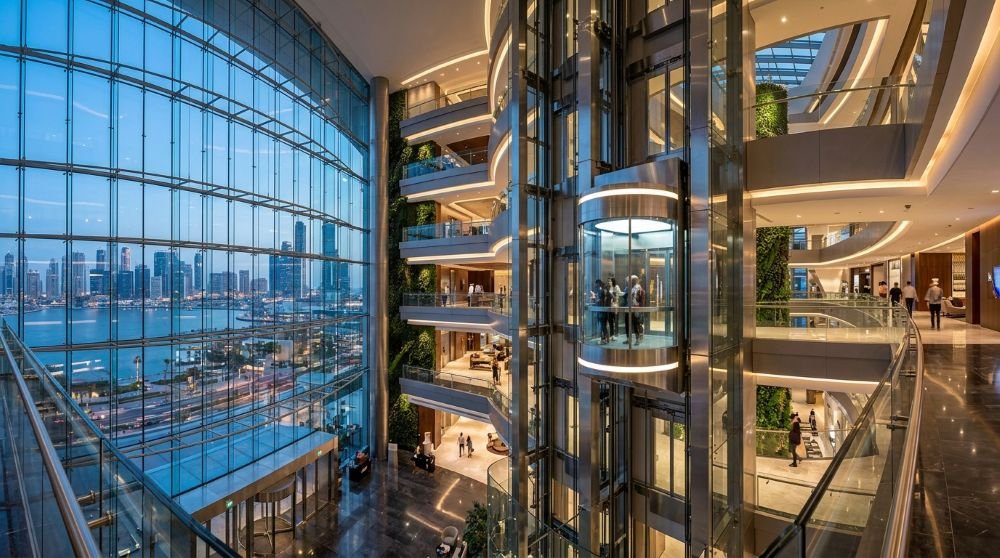
What Is a Panoramic Elevator and Why Does It Cost More?
A panoramic elevator — also called a glass elevator, observation elevator, or scenic elevator — is a lift where the cabin and/or shaft incorporates glass panels that allow occupants and observers to see through the elevator during travel. This transparency is the defining feature that separates panoramic elevators from conventional enclosed cabin lifts — and it is the source of both their premium appeal and their premium cost.
1.1 The Three Elements That Create the Cost Premium
Glass engineering is the first premium cost element. Conventional elevator shafts are built from concrete, brick, or steel — inexpensive structural materials that can be finished by standard building contractors. A panoramic elevator shaft requires engineered glass panels: tempered, laminated safety glass (or structural glass in premium configurations) that must be manufactured to precise dimensions, handled with specialist lifting equipment, and installed by glazing engineers rather than general contractors. The glass material and installation alone account for 20–35% of the premium over a conventional elevator.
Structural engineering complexity is the second element. A glass shaft that is transparent must transfer all structural loads (wind, self-weight, imposed loads from the elevator mechanism) through the glass-and-frame system. This requires specific structural engineering — typically a structural glass design by a specialist engineer, structural connections that are both technically adequate and visually minimal, and a foundation design that accommodates the point loads from the glass structure. This engineering cost is additional to the standard elevator structural design.
Aesthetic finish quality is the third element. A panoramic elevator that is visible from the interior of a luxury building demands a higher level of finish quality than a conventional enclosed elevator — because every component is on display. The cabin interior, the handrail, the control panel, the drive components where visible, and the structural connections must all meet the visual standard of the surrounding architecture. This requires premium components, precision installation, and a quality assurance process that is more intensive than standard elevator work.
1.2 Panoramic vs. Standard Elevator — Cost Differential
| Cost Component | Standard Enclosed Elevator | Panoramic Elevator | Premium Multiplier |
| Shaft/hoistway construction | Concrete or brick — standard rates | Engineered glass + frame structure | 2.5–4.5× shaft cost |
| Structural engineering fees | Standard civil calculation | Specialist glass structure design | 2–3× engineering fee |
| Cabin specification | Standard steel, painted or SS304 | Glass panels, premium interior | 1.8–3.0× cabin cost |
| Drive system | Standard hydraulic or traction | Often MRL gearless for noise | 1.2–1.5× drive cost |
| Glazing contractor | Not required | Required — specialist installation | Additional USD 4,000–15,000 |
| Lighting design | Basic integrated lighting | Architectural lighting integration | Additional USD 2,000–8,000 |
| Installation complexity | Standard — 5–8 days | Higher precision — 7–14 days | Additional USD 2,000–5,000 |
| TOTAL INSTALLED (typical) | USD 25,000–45,000 | USD 48,000–200,000+ | 2–5× total cost |
Panoramic Elevator Cost in Syria The Complete Price Guide
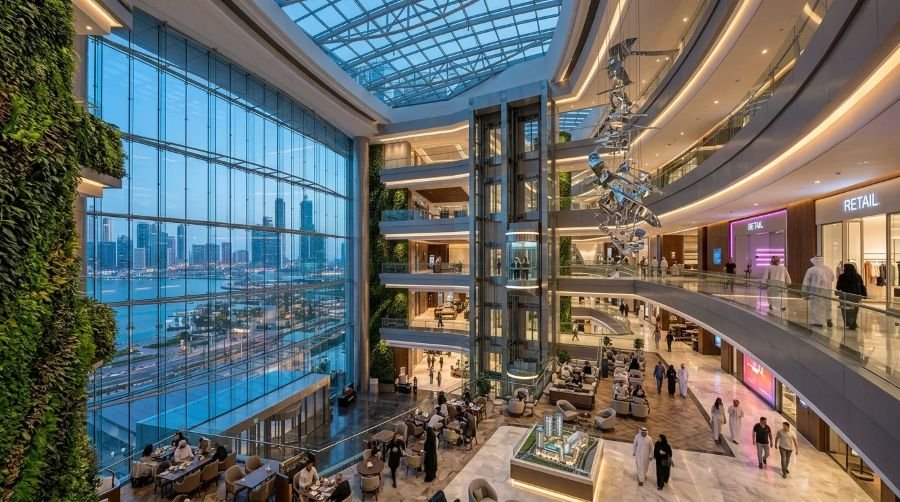
The following price ranges reflect complete installed costs in Syria — including the elevator unit, glass shaft structure, civil works, electrical installation, all architectural finishes documented, commissioning, and a 12-month installation warranty. They are segmented by application type and specification tier to provide the most practically useful pricing reference for Syrian project planning.
2.1 Residential Luxury — Villas and Private Homes
| Specification | Floors | Capacity | Installed Cost Range (USD) | Notes |
| Entry luxury: hydraulic, semi-panoramic, standard glass | 2–3 | 3 persons / 250 kg | $32,000–$52,000 | Standard tinted glass, single glazed face |
| Standard luxury: MRL traction, semi-panoramic, ultra-clear glass | 2–4 | 3–4 persons / 320 kg | $48,000–$78,000 | Low-iron glass, quiet operation, premium cabin |
| Premium luxury: MRL, full panoramic, ultra-clear, custom cabin | 3–5 | 4 persons / 320 kg | $72,000–$120,000 | Frameless glass, bespoke interior, smart integration |
| Flagship: structural glass, architectural statement | 3–6 | 4–6 persons / 450 kg | $110,000–$220,000+ | Full bespoke engineering, landmark specification |
2.2 Commercial & Retail — Malls, Towers & Mixed-Use
| Specification | Floors | Capacity | Installed Cost Range (USD) | Notes |
| Standard commercial panoramic, hydraulic | 3–5 | 8–10 persons / 630 kg | $55,000–$90,000 | Mall atrium standard — high-capacity, durable |
| Premium commercial, MRL traction, ultra-clear | 4–8 | 8–13 persons / 1,000 kg | $85,000–$150,000 | Commercial tower specification — speed priority |
| High-rise commercial panoramic, MRL high-speed | 6–15 | 10–13 persons / 1,000 kg | $130,000–$250,000 | High-speed specification for tall buildings |
| Flagship commercial/retail atrium lift | 4–10 | 13–21 persons | $200,000–$450,000+ | Full engineering, landmark mall installation |
2.3 Hospitality — Hotels, Resorts & Premium F&B
| Specification | Floors | Capacity | Installed Cost Range (USD) | Notes |
| Standard hotel panoramic, hydraulic, 4-star spec | 3–5 | 8 persons / 630 kg | $58,000–$95,000 | Standard Syrian hotel specification |
| Premium hotel, MRL traction, ultra-clear, 5-star | 4–8 | 8–10 persons / 800 kg | $90,000–$155,000 | Five-star specification — noise, speed, finish |
| Rooftop restaurant panoramic lift | 4–8 | 6–8 persons | $72,000–$125,000 | Extended rise, thermal specification required |
| Flagship resort / luxury hotel atrium | 5–12 | 10–13 persons | $150,000–$320,000 | Signature architectural installation |
| All price ranges above are orientation guides for project budget planning. Hard System provides project-specific quotations after a site visit and brief review — the only basis for an accurate cost estimate. Panoramic elevator costs vary more than any other elevator type because the design, glass specification, and structural system are project-specific. Request your free consultation at hard-sy.com. |
The 9 Cost Drivers That Determine Your Panoramic Elevator Price in Syria
Understanding what drives panoramic elevator costs in Syria enables buyers to make informed trade-off decisions — choosing where to invest for maximum impact and where to moderate specification without compromising the result. The following nine cost driver cards document each variable with its Syria-specific context.
| Cost Driver 1: Glass Specification — Standard vs. Ultra-Clear | Impact: Standard tinted: +0% → Ultra-clear low-iron: +20–35% on glass cost |
| Standard float glass — even when tempered and laminated — contains iron oxide that gives panels a green tint, visible as a green edge on thick glass sections. Ultra-clear (low-iron) glass eliminates this tint, producing water-white clarity. In a luxury Syrian residential or commercial project where the glass elevator is a visible design feature, the difference between standard and ultra-clear glass is immediately apparent to any visitor. The glass cost premium for ultra-clear specification is 20–35% — modest relative to total project cost, but significant in visual quality. Syria-Specific Note: Syrian summers create high solar heat gain through glass elevator shafts. Hard System recommends specifying low-emissivity (low-e) coating on ultra-clear glass for south and west-facing Syrian panoramic elevator shafts — adding 8–12% to glass cost but reducing solar heat gain by 30–50% and improving passenger thermal comfort. |
| Cost Driver 2: Drive Technology — Hydraulic vs. MRL Gearless Traction | Impact: Hydraulic: baseline → MRL gearless traction: +15–25% |
| Hydraulic panoramic elevators are less expensive initially and do not require a machine room above the shaft — but they generate pump noise audible in adjacent spaces, are limited in speed (typically 0.6 m/s maximum for residential), and require hydraulic oil management. Machine-Room-Less (MRL) gearless traction systems are quieter (35–42 dB(A) vs. 45–55 dB(A) for hydraulic), faster (up to 1.75 m/s), more energy-efficient, and increasingly the standard specification for Syrian luxury residential and premium commercial panoramic elevators. Syria-Specific Note: Syria’s power supply instability affects hydraulic and traction systems differently. Hydraulic pumps are more vulnerable to voltage fluctuations — pump motor failures under variable voltage are common without AVR protection. MRL traction VFD systems with appropriate input filtering tolerate voltage variation better. Hard System specifies AVR protection as mandatory for both drive types in Syrian installations. |
| Cost Driver 3: Floor Count and Rise Height | Impact: 2 floors: baseline → Each additional floor: +USD 6,000–18,000 |
| Each additional floor served by a panoramic elevator adds: one landing door assembly (USD 3,500–8,000 for glass/frameless specification), extended guide rails and glass shaft panels (USD 2,000–5,000 per floor depending on glass specification), additional civil works at each landing, and extended electrical wiring and conduit. The per-floor increment is higher for panoramic elevators than for conventional elevators because the glass shaft panel at each additional level is a significant material and installation cost. Syria-Specific Note: In Syrian multi-floor luxury residential towers, specifying the panoramic elevator to serve future upper floors at the time of initial installation — even if those floors are not yet built — adds approximately 30–40% to the current cost per floor but eliminates the far more expensive future extension scenario, which requires structural disassembly, glass removal, and reinstallation. |
| Cost Driver 4: Cabin Capacity and Size | Impact: 6-person residential: baseline → 13-person commercial: +60–80% |
| Panoramic elevator cabin size directly determines the shaft structure dimensions — and the shaft structure is one of the largest cost components in any panoramic elevator project. A 6-person residential panoramic cabin (approximately 1,100mm × 1,400mm floor area) requires a significantly smaller glass shaft than a 13-person commercial cabin (approximately 1,600mm × 2,000mm floor area). The cabin capacity specification should be derived from the actual use requirements — not rounded up to the nearest catalogue size without justification. Syria-Specific Note: Syrian luxury residential panoramic elevators are frequently over-specified in capacity by developers trying to future-proof. A 6-person cabin (630 kg) is appropriate for a 4–6 bedroom Syrian luxury villa with family and domestic staff use. An 8-person specification (630–800 kg) is typically the maximum justified residential specification. Over-specifying increases shaft dimensions, civil works, and glass area — all of which add cost without operational benefit. |
| Cost Driver 5: Structural System — Frame-and-Glass vs. Self-Supporting Glass | Impact: Steel frame with glass infill: baseline → Self-supporting structural glass: +35–60% |
| The panoramic elevator shaft can be constructed in two fundamentally different ways. A steel frame with glass infill uses a visible steel structural frame to carry all loads, with glass panels as non-structural infill. This is less expensive, more forgiving of construction tolerances, and suitable for most Syrian residential and commercial applications. A self-supporting structural glass system uses engineered glass as a load-bearing element, with minimal or invisible point fixings — producing the cleanest, most frameless aesthetic at significantly higher cost due to the specialist engineering and glass fabrication required. Syria-Specific Note: Steel frame with glass infill is the appropriate structural system for the majority of Syrian panoramic elevator applications — including premium luxury residential. Self-supporting structural glass is a landmark specification appropriate for flagship commercial and ultra-premium residential projects where the glass elevator is the primary architectural statement and budget is unconstrained. Hard System advises on structural system selection based on the visual outcome sought, the building’s structural condition, and the project budget. |
| Cost Driver 6: Cabin Interior Finish — Standard vs. Bespoke | Impact: Standard stainless interior: baseline → Fully bespoke custom interior: +USD 8,000–35,000 |
| The panoramic elevator cabin interior is entirely visible — to occupants during travel and to observers watching the elevator move through the glass shaft. The interior specification therefore has a direct impact on the visual quality of the installation. Standard cabin interiors use brushed stainless steel walls, standard non-slip floor, and a catalogue control panel — cost-effective and durable but visually generic. Bespoke cabin interiors specify custom materials: marble or stone floors, leather or fabric wall treatments, custom handrail profiles, frameless touch-sensitive control panels, and integrated ceiling lighting — creating a cabin interior that is an extension of the building’s design language. Syria-Specific Note: Hard System works with Syrian interior designers to develop bespoke cabin interior specifications — providing material samples, technical limitations, and dimensional mock-ups during the design phase. The bespoke interior is typically the single specification decision with the highest visual impact relative to its cost — a USD 12,000 cabin interior upgrade on a USD 75,000 panoramic elevator installation is a 16% cost increase that transforms the perceived quality of the entire system. |
| Cost Driver 7: Civil Works — Shaft, Pit, and Structural Integration | Impact: Standard new-build civil: baseline → Complex retrofit civil: +40–80% |
| Civil works for a panoramic elevator include: shaft structure construction (steel frame fabrication and erection, or structural glass engineering), pit construction (reinforced concrete pit below lowest landing), foundation design, all landing opening structural modifications, and connection details between the elevator shaft and the building structure. In a new-build Syrian project designed around the elevator from the outset, civil works are the most cost-efficient. In a retrofit project in an existing Syrian building, civil works costs increase dramatically — core drilling, structural assessment, shoring during construction, and access constraints all add to the base cost. Syria-Specific Note: Hard System conducts a pre-design structural survey for every Syrian panoramic elevator project — identifying existing structural conditions, available pit depth, and any reinforcement requirements before issuing a quotation. This survey, conducted at no charge, prevents the most common source of civil works cost surprises during installation. |
| Cost Driver 8: Power Protection — AVR and UPS | Impact: No protection (not recommended): baseline → Full AVR + UPS emergency lowering: +USD 800–2,000 |
| Syria’s power supply delivers voltage fluctuations that damage panoramic elevator control boards, VFD systems, and motor windings at rates 3–4× higher than manufacturers predict. An Automatic Voltage Regulator (AVR) stabilises the supply to within the control board’s operating range. A UPS emergency lowering system provides battery-backed power to lower the elevator to the nearest floor during power outages — preventing passenger entrapment in a glass cabin between floors. Both are mandatory in Hard System’s Syria specifications. Syria-Specific Note: The USD 800–2,000 cost of AVR and UPS protection is the highest-ROI investment in any Syrian panoramic elevator installation. A single control board replacement due to power surge costs USD 4,000–9,000. A passenger entrapment event in a glass cabin during a Syrian power outage is an immediate reputation and liability issue for the building owner. Neither outcome is acceptable when the preventive cost is this low. |
| Cost Driver 9: Import, Customs, and Freight | Impact: Standard import, well-documented: baseline → Complex import, poorly documented: +15–30% |
| All panoramic elevator components are imported into Syria. The landed cost depends on: the supplier’s country of origin (European manufacturers have higher freight costs than Asian), the correct HS (Harmonized System) customs classification (incorrect classification results in unexpected duty assessments at port), the shipping format (full container load vs. groupage), and Syrian port and inland freight conditions. Hard System’s established import process — using pre-cleared supplier documentation, correct HS classification, and direct freight relationships — achieves lower landed costs and more predictable timelines than ad-hoc import arrangements. Syria-Specific Note: Syria’s import environment for elevator components has improved since 2022 but remains subject to port congestion and regulatory changes that affect lead times. Hard System initiates import documentation at purchase order placement — not at equipment shipment — to ensure customs clearance is ready the moment equipment arrives at Latakia port. This practice reduces port-to-site time from the typical 3–4 weeks to 7–10 days for our clients. |
Hidden Costs That Most Syrian Panoramic Elevator Quotations Exclude
The single largest cause of panoramic elevator budget overruns in Syrian projects is not price inflation or scope changes — it is hidden costs that were never included in the initial quotation. The following checklist documents every cost item that Hard System’s quotations explicitly include, and that should be demanded in writing from any supplier before contract award.
- Glass shaft civil works: the steel frame or structural glass system supporting the shaft panels — often excluded from ‘elevator supply’ quotations and treated as a building contractor item
- Structural engineering fees: the specialist design of the glass shaft structure, typically USD 2,500–6,000 — often excluded from both elevator and civil contractor quotations
- Landing door specification: frameless glass landing doors (as opposed to standard steel) cost USD 3,500–8,000 per floor and are frequently substituted to a lower specification in initial quotations
- Ultra-clear glass upcharge: if standard green-tinted glass is quoted and ultra-clear is desired, the upcharge is 20–35% on glass — clarify this in writing before procurement
- AVR and UPS emergency lowering: mandatory in Syria — confirm these are included in the quoted scope and specify the UPS capacity in kVA
- Cabin interior bespoke finishes: custom floor materials, handrails, and control panels are typically quoted separately from the standard cabin — confirm what ‘standard’ means
- Lighting design and installation: architectural lighting for the cabin ceiling, floor perimeter, and shaft exterior is typically not included in the elevator quotation
- Smart home integration: KNX, Crestron, or Control4 interface programming — confirm whether included or quoted separately
- Permits and regulatory inspection fees: mechanical installation permits, municipality inspection fees, and safety certification costs vary by governorate — confirm responsibility in writing
- Commissioning and load testing: the formal engineering commissioning process including load test documentation — confirm it is included
- First-year preventive maintenance: the first maintenance visit schedule and whether it is included in the project price or billed additionally
- Glass cleaning at handover: the installed glass surfaces require professional cleaning before handover to remove installation marks, adhesive residue, and construction dust
| WARNING FOR SYRIAN BUYERS: A panoramic elevator quotation that does not explicitly include civil works for the glass shaft structure, AVR protection, UPS emergency lowering, and structural engineering fees is almost certainly underrepresenting the true project cost by 25–45%. Always demand a fully itemised scope of works before comparing quotations. Hard System’s quotations include every item on the above checklist — explicitly stated and individually priced. |
The 20-Year Total Cost of Ownership — Beyond the Purchase Price
Panoramic elevator purchase decisions made purely on initial installed cost systematically undervalue the long-term cost difference between specification tiers. The following 20-year TCO comparison demonstrates why premium specification often delivers lower lifetime cost than entry-level specification in Syria’s operating environment.
| Cost Category | Entry Specification (Standard Glass, Hydraulic) | Premium Specification (Ultra-Clear, MRL Gearless) |
| Initial installed cost | $32,000–$52,000 | $65,000–$105,000 |
| Annual maintenance (Syria-calibrated) | $3,000–$4,800/yr | $2,400–$3,600/yr (lower due to fewer faults) |
| 20-year cumulative maintenance | $60,000–$96,000 | $48,000–$72,000 |
| Control board replacements (est. 2×) | $10,000–$16,000 (higher failure rate without MRL) | $6,000–$10,000 |
| Hydraulic oil management (20 years) | $4,000–$8,000 | $0 (no hydraulic system) |
| Energy consumption (20 years) | $12,000–$20,000 | $7,000–$12,000 (MRL 30–40% more efficient) |
| Major overhaul (Year 12–15) | $12,000–$20,000 | $8,000–$15,000 |
| Glass replacement (if standard glass yellows/etches) | $6,000–$14,000 | $4,000–$9,000 (lower — ultra-clear more durable) |
| ESTIMATED 20-YEAR TCO | $136,000–$226,000 | $138,000–$223,000 |
The 20-year TCO analysis demonstrates a counterintuitive finding: the premium specification panoramic elevator — which costs USD 30,000–55,000 more to install — delivers a comparable or lower 20-year total cost in Syria’s operating environment, primarily through lower energy consumption, lower maintenance frequency, and higher component longevity. The premium is paid upfront rather than distributed across 20 years of higher operating cost.
Panoramic Elevator Cost by Syrian Application — Real Project Orientation
6.1 Luxury Residential Villa — Damascus or Latakia
A typical Syrian luxury villa specification is a 3–4 floor semi-panoramic elevator with ultra-clear glass on two faces, MRL gearless traction drive, bespoke cabin interior with natural stone floor and brass handrail, and smart home integration with the villa’s KNX system. The realistic installed cost for this specification in Damascus or Latakia is USD 65,000–105,000 — including all civil works, electrical, AVR, UPS, and first-year maintenance. Developers who budget USD 35,000–45,000 for this specification will inevitably face scope reduction or significant change orders.
6.2 Luxury Residential Tower — Premium Apartment Building
A Syrian luxury residential tower serving 8–12 floors with a panoramic elevator as a signature lobby feature requires a commercial-grade panoramic elevator specification: 8–10 person capacity, full panoramic glass shaft visible from the lobby and all floor landings, high-speed MRL drive (1.0–1.75 m/s), and premium interior finishes appropriate for a multi-unit high-end building. Installed cost for this specification: USD 120,000–200,000. This specification positions the building above comparable tower offerings in the Syrian premium residential market.
6.3 Commercial Mall — Atrium Installation
A Syrian commercial mall atrium panoramic elevator is typically a 4–6 floor, 13-person, high-capacity installation with a structural glass or glass-and-steel shaft visible from the full atrium volume. The installed cost for a standard Syrian mall panoramic elevator is USD 130,000–220,000 for a 4–6 floor installation. Premium flagship mall specifications with fully engineered structural glass shafts reach USD 300,000–450,000+. The panoramic elevator in this context is a marketing investment as much as an infrastructure investment — it is a feature in every promotional photograph of the development.
6.4 Five-Star Hotel Lobby
A five-star Syrian hotel lobby panoramic elevator is typically a signature feature of the property’s arrival experience. The specification typically involves 5–8 floors, full panoramic glass, premium cabin interior matched to the hotel’s design language, and integration with the hotel’s building management system. Installed cost for a standard five-star Syrian hotel panoramic elevator: USD 95,000–165,000. Landmark hotel specifications with bespoke structural glass: USD 180,000–320,000. These costs are typically capitalised into the hotel development cost rather than treated as an operational expense — and they contribute measurably to the property’s star rating assessment.
For more information on Hard System’s full service offering across residential and commercial vertical transportation in Syria, including our guide to residential glass lifts in Syria and our elevator installation in Syria services, visit hard-sy.com.
How to Get an Accurate Panoramic Elevator Quotation in Syria
The most common cause of panoramic elevator project budget failures in Syria is not choosing the wrong supplier — it is providing insufficient information for an accurate quotation. The following information brief, submitted to Hard System at the outset of an enquiry, enables a fully scoped and accurate cost estimate.
Information Required for an Accurate Panoramic Elevator Quotation
- Building type and use (luxury villa, apartment building, commercial tower, hotel, mall)
- Number of floors to be served and floor-to-floor heights in millimetres (measure all — they are often unequal)
- Maximum number of simultaneous users (determines capacity specification)
- Available shaft footprint dimensions or flexibility to design around the elevator (for new-build)
- Glass specification preference: standard green-tinted tempered, ultra-clear low-iron, low-e coated
- Structural preference: steel frame with glass infill vs. self-supporting structural glass
- Drive preference: hydraulic (lower cost, slower, louder) vs. MRL traction (premium, quiet, faster)
- Cabin interior specification level: standard catalogue vs. bespoke materials
- Smart home integration: platform (KNX, Crestron, Control4, none)
- Power supply situation at site: three-phase availability, generator, known power quality issues
- Delivery timeline: project completion date and installation window available
- Budget framework: not a fixed price — a realistic range that determines which specification tier to develop
| Hard System provides a free pre-quotation consultation visit for all Syrian panoramic elevator projects above USD 45,000 in estimated value. Our engineering team visits the site, reviews the project brief, and produces a fully scoped and itemised quotation within 7 business days. Contact us at hard-sy.com to schedule your consultation. |
Frequently Asked Questions (FAQ)
Q1: What is the minimum realistic budget for a panoramic elevator in a Syrian luxury villa?
For a genuine luxury-specification panoramic elevator — one that will be visually impressive, operate quietly, and perform reliably under Syria’s power conditions — the minimum realistic budget for a 3-floor Syrian luxury villa is USD 48,000–65,000 installed. Below this range, compromises must be made on glass quality (standard tinted glass), drive technology (hydraulic rather than MRL), or cabin interior specification that will be apparent to visitors and residents. Hard System is transparent about these trade-offs in every consultation — because a technically adequate but visually underwhelming result serves no one well.
Q2: Why are panoramic elevator costs so much higher in Syria than prices quoted online from international manufacturers?
International manufacturer web pricing reflects factory gate or export pricing — before import duties, Syrian customs fees, freight costs, in-country civil works, electrical installation, and local installation labour. In Syria, the total landed and installed cost of a panoramic elevator is typically 65–85% higher than the manufacturer’s published export price for the same unit. Additionally, international pricing often excludes the Syrian-mandatory extras: AVR voltage protection, UPS emergency lowering, and the additional civil works required for the glass shaft structure. Hard System’s quotations include all of these components in a single installed price.
Q3: How long does a panoramic elevator installation take in Syria from order to operation?
For a standard residential panoramic elevator (2–4 floors, standard glass specification), the typical timeline is 14–20 weeks from purchase order to operational commissioning: 8–12 weeks for manufacturing, 1–2 weeks for customs clearance, and 7–14 days for installation and commissioning. Glass shaft civil works, which run in parallel with the equipment order, typically take 4–6 weeks. Hard System manages the full timeline on behalf of clients — initiating civil works drawings at order placement and customs documentation at equipment shipment to minimise elapsed time at each stage.
Q4: Can I install a panoramic elevator in my existing Syrian home without rebuilding the house?
Yes — and this is one of the most common panoramic elevator applications in Syria’s existing luxury housing stock. The extent of structural intervention required depends on the drive system chosen and the shaft configuration. A pneumatic air-driven glass elevator requires only a circular floor penetration at each level — minimal structural modification. A conventional traction or hydraulic panoramic elevator in a retrofit application requires pit construction, structural openings at each landing, and shaft frame erection. Hard System conducts a free structural assessment for every retrofit project to identify the most appropriate system type and to quantify the civil works required before any commitment.
Q5: Does the panoramic elevator’s glass specification affect maintenance costs?
Yes — in two important ways. First, glass surface maintenance (cleaning) is more frequent for panoramic elevators than for conventional enclosed elevators, because the glass surfaces are visible and accumulate dust and marks that require regular professional cleaning in Syria’s dusty environment. Second, the quality of the glass specification affects the long-term condition of the glass. Ultra-clear low-iron glass with anti-reflection and easy-clean coatings maintains its visual clarity longer than standard uncoated glass, which can etch and cloud in Syria’s water quality conditions if cleaned incorrectly. Hard System’s maintenance contracts include glass surface care protocols specific to each glass specification.
Q6: How does the panoramic elevator cost compare to a standard elevator for the same specification?
For equivalent capacity, floor count, and quality level, a panoramic elevator costs 2–5× more than a conventional enclosed elevator in Syria. A standard 6-person, 4-floor enclosed elevator in a Syrian luxury building is installed for USD 18,000–30,000. The equivalent panoramic specification costs USD 55,000–90,000. The premium is driven primarily by the engineered glass shaft structure, specialist glazing installation, and premium cabin interior specification. For luxury residential projects where the elevator is a visible architectural feature, this premium is typically justified by the design impact and property value contribution. For purely functional vertical access, a conventional elevator is the more economical choice.
Q7: What is the impact of rising USD exchange rates on panoramic elevator costs in Syria?
All panoramic elevator components are imported and priced in USD or EUR. For Syrian buyers transacting in Syrian pounds, exchange rate movements between project approval and equipment delivery (typically 12–20 weeks) can significantly affect the Syrian pound cost of the same project. Hard System manages this risk through exchange rate locking at purchase order placement — fixing the USD price at the time of commitment so that subsequent exchange rate movements do not affect the client’s cost. This protection is particularly valuable for large panoramic elevator projects where the equipment cost is USD 50,000–200,000.
Q8: Does Hard System provide financing options for panoramic elevator installations in Syria?
Hard System structures payment terms appropriate for project cash flows on a project-by-project basis. The standard commercial payment structure is: 40% at purchase order placement (to fund import and manufacturing), 40% at equipment arrival on site, and 20% at commissioning completion. For large commercial or hotel projects, phased payment structures tied to construction programme milestones are available. Hard System does not provide credit financing — but we work with clients to align payment requirements with their project’s funding structure. Contact our commercial team at hard-sy.com to discuss project-specific payment terms.
Conclusion: Understanding the Cost Is the Beginning of Getting It Right
Panoramic elevator costs in Syria are complex — not because the pricing is arbitrary or opaque, but because the product itself is highly variable. The glass specification, the drive technology, the structural system, the cabin interior, the number of floors, and the site conditions are all independent variables that combine to determine the final installed cost. Understanding each variable is the only reliable basis for budget planning, supplier comparison, and specification decision-making.
The buyers who arrive at the best panoramic elevator outcomes in Syria are the ones who invest time in understanding the cost structure before they request quotations — because they can then compare quotations on a like-for-like basis, recognise scope exclusions, make informed specification trade-offs, and avoid the budget overruns that catch underprepared buyers by surprise.
Hard System exists to give Syrian buyers the technical knowledge, the market experience, and the transparent pricing that the panoramic elevator market rarely provides. Our quotations include every cost component. Our site consultations are free. Our engineering team is available to answer specification questions before, during, and after your project. We do not win projects by being the cheapest quotation — we win them by being the most complete and the most reliably delivered.
| Ready to Get an Accurate Panoramic Elevator Cost for Your Syrian Project? Hard System provides free site consultations and fully itemised panoramic elevator quotations for all Syrian residential, commercial, and hospitality projects. Book your consultation today — no commitment required. Book Your Free Panoramic Elevator Consultation Syria’s Most Trusted Panoramic Elevator & Vertical Transportation Partner |