The Escalator That Stops Moving Everything
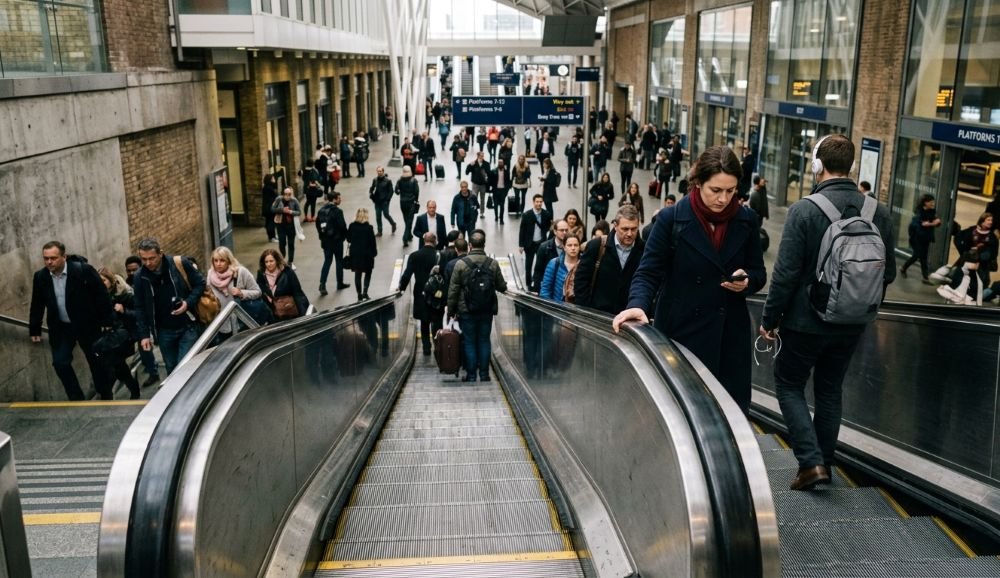
It is 11 AM on a Friday peak shopping hour at one of Damascus’s busiest commercial malls. Then one escalator stops. Within minutes, a queue forms. Within an hour, the affected floor’s retail tenants are reporting 30% lower footfall. By the time a technician arrives, the afternoon rush has been lost entirely. The cause? A step chain that needed a 25-minute lubrication service three months ago.
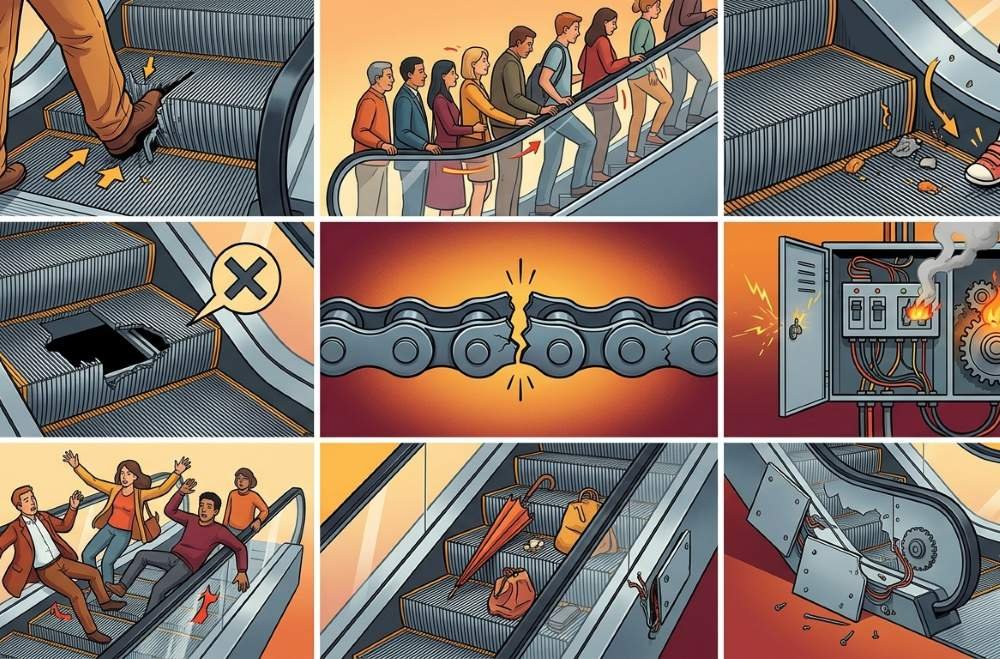
Escalator failures in commercial buildings are rarely dramatic mechanical catastrophes. They are almost always predictable, preventable, and traceable to one of a small set of common problems most of which develop gradually and give clear warning signs long before a full shutdown occurs. The tragedy is not that the failures happen. It is that in Syria’s commercial landscape, the majority of escalator problems that cause full shutdowns were already visible and ignored.
This guide changes that dynamic. Drawing on Hard System’s experience servicing and diagnosing escalators across Syria’s commercial, healthcare, hospitality, and infrastructure sectors, this is the most complete problem-and-solution reference available for escalator operators in the Syrian market. Each problem is presented with its root cause, its Syrian-specific aggravating factors, its warning signs, its solution, and its prevention strategy.
Whether you are a mall manager trying to understand why your escalator keeps tripping, a building owner evaluating a maintenance contract, or an engineer specifying a new installation, this guide gives you the knowledge to act before failure not after it.
| 40% | of escalator shutdowns in commercial buildings globally are caused by deferred maintenance on known, diagnosable issues not random failures. (Source: KONE Global Service Research, 2022) |
| 3–5× | The cost of reactive repair vs. preventive maintenance for the same escalator component failure, based on global facilities management benchmarking data. (Source: Elevator World Technical Report, 2023) |
Section 1: Why Escalator Problems Are More Common and More Serious in Syria
Understanding the Syrian-specific factors that accelerate escalator wear and failure is essential before examining individual problem types. Syria’s operating environment is significantly more demanding than the conditions most international escalator manufacturers design for and this gap between design assumption and operational reality is the root cause of the accelerated failure rates that Syrian facility managers experience.
1.1 Power Supply Instability
Syria’s commercial power supply operates with documented voltage fluctuations of ±15–25% and periodic frequency deviations from the 50Hz standard. Standard escalator control boards and drive motors are designed for stable 380V/50Hz three-phase supply. Under Syrian grid conditions, these components experience electrical stress that accelerates control board component degradation, causes motor winding insulation breakdown, triggers false fault codes that initiate unnecessary shutdowns, and accelerates VFD (Variable Frequency Drive) capacitor failure.
Hard System’s field data from Syrian escalator maintenance contracts consistently shows that control board failure rates in unprotected installations are 3–4 times higher than the manufacturer’s predicted mean time between failures a direct consequence of power supply instability. The solution automatic voltage regulation and surge protection costs USD 1,200–2,500 per installation and eliminates the majority of electrical fault-related shutdowns.
1.2 Dust and Particulate Environment
Syria’s ambient dust levels particularly in eastern cities, near construction sites, and during khamsin dust events are significantly higher than European or East Asian urban environments that most escalator manufacturers’ maintenance schedules assume. Fine dust infiltrates step chain links, bearing housings, comb plate gaps, and motor cooling fins, accelerating wear rates by 30–50% compared to clean-environment equivalents. In commercial malls with high footfall, shoe-carried grit compounds this problem significantly.
1.3 Summer Temperature Extremes
Ambient temperatures in Syrian commercial spaces during summer regularly exceed 35°C even with active air conditioning, and outdoor or semi-covered escalators experience ambient temperatures above 42°C. Standard motors rated for 40°C ambient operate at their thermal limit under these conditions, reducing motor winding insulation life and increasing the risk of thermal shutdown. Drive gearboxes using standard ISO VG 220 gear oil experience viscosity breakdown at temperatures above 50°C causing accelerated gear wear in summer.
1.4 Parts Supply Chain Constraints
When a component fails in a Syrian escalator, the time required to source a replacement part has a direct impact on the duration of the resulting service outage. For escalators from brands without established in-country distribution, critical parts can take 3–8 months to arrive turning what would be a 3-day repair into a multi-month shutdown that costs the building owner tens of thousands of dollars in lost commercial revenue.
This parts availability reality means that preventive maintenance replacing wear components before they fail, on a schedule is not merely a best practice in Syria. It is an economic imperative. The same bearing replacement that costs USD 150 in scheduled maintenance can cost USD 8,000–15,000 in lost revenue if it causes an unexpected shutdown during peak commercial hours.
| SYRIA-SPECIFIC WARNING: Building owners and facility managers who rely on reactive maintenance fixing problems only when they cause shutdowns face a compounded risk in Syria: not only are failure rates higher due to environmental stresses, but repair timelines are longer due to parts availability constraints. The combination makes reactive maintenance far more expensive in Syria than in any other regional market. |
Section 2: The 12 Most Common Escalator Problems in Syria — Causes and Solutions
Each problem below is categorised by severity, documented with its root cause and Syrian aggravating factors, and presented with its solution and prevention strategy. Use this section as a diagnostic reference when your escalator shows abnormal behaviour and as a specification checklist to ensure these issues are addressed in your maintenance contract.
| [CRITICAL] Problem 1: Sudden Complete Shutdown / Emergency Stop Activation |
| Root Cause: Emergency stop activation triggered by a safety circuit fault: comb plate impact sensor triggered by foreign object entrapment, step level monitoring fault detecting a damaged or misaligned step, or safety circuit board fault caused by power surge or voltage spike. Solution: Conduct immediate safety inspection of all comb plates, step surfaces, skirt panels, and the full handrail run before resetting. Never reset an emergency stop without completing a full visual and mechanical safety check. Identify the specific safety circuit that triggered the fault from the control board fault log. • Install AVR and surge protection to eliminate power surge-triggered false safety trips • Implement monthly comb plate inspection clean and verify all sensor operation • Establish a step condition log inspect each step physically every service visit • Train facility staff on correct emergency stop response protocol no unauthorised resets |
| [CRITICAL] Problem 2: Step Chain Breakage or Stretching |
| Root Cause: Step chain links worn beyond service limit due to deferred lubrication or contamination with abrasive dust particles. In Syria, the elevated ambient dust environment accelerates step chain wear to 40–60% faster than manufacturer-predicted intervals when standard lubrication schedules are followed. Solution: Step chain replacement a full-service engineering task requiring specialist tools and factory-trained technicians. Partial chain repair (replacing individual links) is a temporary measure only and must be followed by full chain assessment and replacement planning. Do not operate an escalator with a stretched chain. • Monthly lubrication service critical in Syrian dust environment (not quarterly as per European standard) • Chain tension measurement at every service visit document elongation trend • Replace chain at 2% elongation do not wait for 3% (the international maximum) in high-dust environments • Use sealed-chain specification for high-dust environments |
| [HIGH] Problem 3: Drive Motor Overheating and Thermal Shutdown |
| Root Cause: Motor winding temperature exceeds thermal protection threshold, triggering automatic shutdown. In Syria, primary causes are: (a) motor not rated for actual ambient temperature, (b) motor cooling fins blocked by accumulated dust, (c) motor overloaded by incorrect step chain tension, or (d) low voltage causing the motor to draw excess current to maintain speed. Solution: Allow motor to cool (minimum 45 minutes). Clean motor cooling fins with compressed air. Check and correct chain tension. Verify supply voltage at motor terminals. If motor exceeds thermal shutdown more than twice per month, the motor specification is insufficient for actual site conditions and must be upgraded. • Specify motors with 50°C+ ambient rating for all Syrian installations (not standard 40°C) • Clean motor cooling fins at every monthly service visit • Install AVR to maintain stable supply voltage • Log thermal shutdown events more than 2 per month requires motor specification review |
| [CRITICAL] Problem 4: Control Board Failure and Fault Codes |
| Root Cause: Electronic control board component failure caused by power supply voltage spikes, sustained overvoltage, accumulated heat in the control enclosure, or capacitor degradation from age and thermal cycling. In Syria, control board failure rates are 3–4× higher than manufacturer predictions due to power supply instability. Replacement boards for non-standard brands can take 3–8 months to source. Solution: Control board replacement by a certified technician using an approved replacement board. Do not attempt component-level repair of modern digital control boards without factory-authorised equipment. If the replacement board is not immediately available, source a temporary loan board from your service provider while the permanent replacement is ordered. • Install AVR and surge protection at installation prevents the majority of board failures • Maintain control enclosure ventilation clean ventilation filters every 3 months • Specify brands with established in-country board inventory for Syrian installations • Hard System maintains stock of control boards for all brands we install |
| [HIGH] Problem 5: Handrail Drive Failure (Handrail Stops Moving) |
| Root Cause: Handrail drive belt or friction wheel wear causing the handrail to slow or stop while steps continue moving. This is a serious safety hazard passengers holding the handrail for balance will experience speed differential that can cause falls. Rubber handrail drive belts degrade faster in Syria’s high-temperature environment. Solution: Immediate shutdown of the escalator is required when handrail speed desynchronisation is detected. Do not continue operating. Replace the handrail drive belt or friction wheel and re-commission after verifying handrail-to-step speed synchronisation. Test at both full load and zero load desynchronisation often only appears under load. • Inspect handrail drive belt condition at every monthly service visit • Replace drive belt at first sign of surface cracking, fraying, or glazing do not wait for failure • Specify heat-resistant drive belt compound for Syrian climate • Install handrail speed sensor with automatic stop on desynchronisation |
| [HIGH] Problem 6: Comb Plate Damage and Entrapment Incidents |
| Root Cause: Comb plate teeth broken, missing, or bent by impact from hard objects (shoes, luggage wheels, cleaning equipment). Damaged comb teeth create entrapment gaps that are a serious injury risk particularly for children’s footwear. Comb plates in Syrian malls are subject to higher impact rates due to the prevalence of wheeled luggage and shopping trolleys at landing areas. Solution: Replace any damaged comb plate segments immediately do not operate an escalator with missing or broken comb plate teeth. This is a safety-critical component. A temporary fix of bending teeth back is not acceptable for a commercial escalator in public service. • Monthly visual inspection of all comb plate teeth photograph and document condition • Install bollards or buffer guides at landing areas to prevent trolley/luggage impacts on comb plates • Specify stainless steel or hardened aluminium comb plates for high-impact environments • Train facility staff to report comb plate damage immediately do not wait for scheduled service |
| [HIGH] Problem 7: Abnormal Noise — Grinding, Rattling, Clicking, or Squealing |
| Root Cause: Abnormal operational noise is one of the most valuable early warning systems an escalator provides. Different sounds indicate different problems: grinding = bearing failure or chain running dry, rattling = loose step axle or damaged step roller, clicking = step chain link fault or debris in step gap, squealing = handrail drive belt slipping or dry roller bearings. Solution: Each noise type requires targeted investigation. Grinding and squealing warrant immediate shutdown for safety inspection. Rattling and clicking warrant urgent (within 48 hours) diagnostic investigation. Never mask noise with increased lubrication without identifying the underlying cause this delays diagnosis and allows progressive damage to continue. • Conduct an operational noise check at every service visit listen for each noise type at both landings and mid-run • Document noise characteristics in the service log changes in noise pattern are diagnostically valuable • Train facility staff on the noise-to-problem matrix so they can report issues accurately • Establish a 48-hour response protocol for new abnormal noise reports from facility staff |
| [MODERATE] Problem 8: Vibration and Rough Passenger Experience |
| Root Cause: Passenger-perceptible vibration during escalator operation indicates: worn step rollers running in degraded tracks, damaged or flat-spotted step wheels, step chain tension imbalance, or worn main drive shaft bearings. In Syria, elevated vibration develops faster than international norms due to dust contamination of roller tracks. Solution: Step roller and track inspection identify and replace worn rollers and damaged track sections. Check step chain tension balance across all flight sections. Inspect main drive shaft bearing for play. A comprehensive vibration investigation is a full-day diagnostic task requiring specialist equipment it should not be attempted by general maintenance staff without vertical transportation training. • Roller track cleaning at every service visit dust accumulation directly causes premature roller wear • Step roller inspection every 6 months measure roller diameter and compare to service limit • Lubricate roller axles separately from step chain different lubrication specification required • Document vibration level (passenger perception scale 1–5) at every service visit |
| [HIGH] Problem 9: Steps Misalignment at Landing Areas |
| Root Cause: Steps that do not achieve full horizontal positioning at the comb plate engagement zone or that arrive at an angle rather than level represent a trip hazard at the most critical safety point of the escalator. Causes include: bent step axle, damaged step guide, worn step chain with uneven elongation across different flight sections, or incorrect step chain tension. Solution: Identify and replace the specific misaligned step and inspect the corresponding step chain section for uneven elongation. If multiple steps show misalignment, a full step chain tension survey is required. Do not operate an escalator with visible step misalignment at the landing this is a liability risk and a safety incident waiting to occur. • Step-by-step visual inspection at every service visit run the escalator slowly and observe each step at both landings • Immediate removal from service for any step showing visible misalignment • Step chain tension equalisation as part of every 6-month comprehensive service • Install step-level monitoring sensor that auto-stops on detection of step misalignment |
| [MODERATE] Problem 10: Handrail Cracking, Peeling, or Surface Deterioration |
| Root Cause: Handrail surface degradation caused by UV exposure (outdoor installations), ozone exposure, cleaning chemical incompatibility, or age-related rubber compound hardening. Cracked or peeling handrails are a passenger safety risk sharp edges can cause lacerations. They are also a liability and hygiene concern in healthcare environments. Solution: Handrail replacement a specialist task requiring factory-trained technicians and appropriate splicing tools. Handrail splice quality directly affects the handrail’s structural integrity under passenger grip load. Handrail replacement by unqualified technicians using incorrect splicing technique is a common cause of handrail separation incidents. • Visual handrail inspection at every monthly service visit check full length for cracks, peeling, and surface hardening • Verify cleaning product compatibility with handrail rubber compound specification • Specify UV-stabilised handrail compound for outdoor and semi-covered installations • Replace handrail at first sign of surface cracking do not wait for full peeling |
| [HIGH] Problem 11: VFD (Variable Frequency Drive) Failure |
| Root Cause: The VFD controls motor speed and provides smooth start/stop operation. VFD failure causes the escalator either to run at fixed speed (losing soft-start capability), to fail to start, or to trip on overcurrent. In Syria, VFD failure is accelerated by power supply instability voltage spikes damage power transistor modules and by heat accumulation in control enclosures during summer. Solution: VFD replacement or module-level repair by an electronics specialist with VFD experience. VFD replacement for mid-range commercial escalators costs USD 2,500–6,500 depending on power rating and brand. VFD repair by unqualified technicians attempting to replace power transistors without correct soldering and programming equipment causes secondary damage that escalates repair cost significantly. • Install AVR the single most effective VFD protection measure in the Syrian power environment • Maintain VFD enclosure ventilation clean cooling filters monthly during summer • Check DC bus voltage at every service visit abnormal readings indicate capacitor degradation • Specify VFDs with built-in harmonic filtering for Syrian grid conditions |
| [MODERATE] Problem 12: Lubrication Failure — Dry Running and Accelerated Wear |
| Root Cause: Insufficient lubrication of step chain, drive chain, handrail drive system, and roller bearings is the single most common cause of premature component wear across all escalator types in Syria. In Syria’s dust environment, standard international lubrication intervals (every 3 months) are grossly insufficient dust mixes with lubricant to form an abrasive paste that accelerates wear rather than preventing it. Solution: Full lubrication service: drain and re-apply step chain lubricant, drive chain lubricant, roller bearing grease, and handrail drive lubricant. Use the manufacturer-specified lubricant grade substitution with lower-grade products is a common cost-cutting measure that causes accelerated wear within 6–12 months. • Monthly lubrication service for all Syrian commercial escalators • Use sealed step chain specification to reduce dust contamination of chain lubricant • Clean chain before re-lubrication never apply fresh lubricant over contaminated old lubricant • Document lubricant brand, grade, and quantity applied at every service visit |
Section 3: Quick Diagnostic Reference — Symptom to Problem Mapping
Use this table as a first-response diagnostic tool when your escalator shows an abnormal symptom. Match the symptom to the most likely problem, then refer to the detailed problem card in Section 2 for the full diagnosis and solution.
| Symptom Observed | Most Likely Problem | Severity | Immediate Action |
| Complete shutdown — no movement | Emergency stop triggered / control board fault | CRITICAL | Safety inspection before reset |
| Grinding noise during operation | Bearing failure / dry chain | HIGH | Shutdown within 2 hours |
| Squealing from handrail area | Handrail drive belt slipping | HIGH | Shutdown — desync safety risk |
| Clicking at regular intervals | Step chain link fault / debris | HIGH | Urgent inspection within 24 hrs |
| Rattling from step area | Loose step axle / damaged roller | HIGH | Inspection within 48 hrs |
| Vibration felt by passengers | Worn step rollers / track damage | MODERATE | Log and schedule investigation |
| Steps misaligned at landing | Chain elongation / step damage | CRITICAL | Shutdown immediately |
| Handrail slower than steps | Handrail drive belt worn | CRITICAL | Shutdown immediately |
| Motor thermal shutdown | Overheating / voltage issue | HIGH | Cool, inspect, check voltage |
| Control board fault codes | Power surge / board degradation | HIGH | Log codes, call technician |
| Visible comb plate damage | Impact damage / broken teeth | CRITICAL | Shutdown until replaced |
| Handrail cracking / peeling | UV / age / chemical damage | MODERATE | Schedule replacement |
| Escalator slow to start / jerky | VFD fault / motor issue | HIGH | Log and call technician |
| Unusual smell (burning) | Motor overheating / electrical | CRITICAL | Shutdown immediately |
Section 4: The Preventive Maintenance Programme That Prevents All 12 Problems
Every problem documented in Section 2 is preventable with a properly designed and consistently executed preventive maintenance programme. The following schedule is Hard System’s recommended maintenance framework for commercial escalators operating in Syrian conditions calibrated for Syria’s specific environmental stressors, not copied from European manuals.
| Maintenance Task | Frequency (Syria) | Standard International | Why Syria Needs More |
| Full lubrication service (chain, bearings, drives) | Monthly | Quarterly | Dust forms abrasive paste with lubricant |
| Step chain tension measurement and documentation | Monthly | Quarterly | Heat causes faster elongation |
| Safety system functional test (all switches) | Monthly | Quarterly | Power spikes cause false deactivation |
| Motor cooling fin cleaning | Monthly | Semi-annually | Dust blocks cooling rapidly |
| Comb plate visual inspection and cleaning | Monthly | Monthly | High-grit footwear environment |
| Control board inspection and ventilation clean | Every 3 months | Annually | Heat + power instability accelerate board wear |
| Drive chain full inspection and tension check | Every 3 months | Every 6 months | Higher wear rate in hot, dusty conditions |
| Step roller measurement (diameter/wear) | Every 6 months | Annually | Grit contamination accelerates roller wear |
| Handrail inspection (full length, all surfaces) | Monthly | Monthly | UV and heat degrade rubber faster |
| Electrical supply voltage and frequency logging | Every 3 months | Annually | Power instability is primary failure driver |
| Bearing play measurement (main drive shaft) | Every 6 months | Annually | Heat cycling causes faster bearing race wear |
| Full lubrication changeover (drain + refill) | Every 18 months | Every 3 years | Lubricant degrades faster in Syrian heat |
| Step chain replacement assessment | Every 2–3 years | Every 4–5 years | Accelerated wear in dust environment |
| Hard System’s escalator maintenance contracts for Syrian commercial clients are built on this Syrian-calibrated schedule — not the standard European schedule supplied with most international escalator brands. The difference in failure rate between the two schedules, in Syrian conditions, is approximately 3:1. |
Section 5: The Real Cost of Each Problem — Repair vs. Prevention
Building owners and facility managers who delay maintenance investment frequently do so on the basis that the components have not yet failed. This section presents the economic reality: the cost of reactive repair versus the cost of preventive maintenance, for each of the 12 most common escalator problems.
| Problem | Preventive Cost (USD) | Reactive Repair Cost (USD) | Revenue Loss (1-week outage) |
| Step chain replacement (scheduled) | $800–1,500 | $1,500–3,000 + emergency callout | $5,000–25,000+ |
| Control board replacement (unprotected) | $1,200–2,500 (AVR) | $3,500–8,000 + parts wait | $15,000–50,000+ |
| Drive motor replacement (under-specified) | $0 (correct spec at purchase) | $4,000–9,000 | $15,000–50,000+ |
| Handrail drive belt (scheduled) | $150–280 | $280–500 + emergency | $5,000–25,000+ |
| VFD replacement (unprotected) | $1,200–2,500 (AVR) | $2,500–6,500 | $15,000–50,000+ |
| Comb plate replacement (scheduled) | $300–600/section | $600–1,200 + emergency | $5,000–25,000+ |
| Step roller replacement (scheduled) | $400–900/flight | $900–2,000 + emergency | $5,000–25,000+ |
| Bearing replacement (scheduled) | $200–450 | $800–2,500 + emergency | $5,000–25,000+ |
The revenue loss column assumes a mid-sized Syrian commercial mall with typical daily escalator-adjacent retail turnover. In larger malls or during peak periods (Eid, National Holidays), actual revenue loss per day of shutdown can be significantly higher than these estimates.
| KEY INSIGHT: The annual cost of a comprehensive preventive maintenance contract for a Syrian commercial escalator is USD 2,400–4,800. The cost of a single avoidable control board failure with associated parts wait and revenue loss routinely exceeds USD 20,000–60,000. The ROI on preventive maintenance in the Syrian market is among the highest of any commercial building investment. |
Frequently Asked Questions (FAQ)
Q1: How quickly should a commercial escalator problem be reported and investigated?
Response urgency depends on the type of problem. Critical issues — safety circuit faults, emergency stops, step misalignment, handrail desynchronisation, comb plate damage, or any burning smell — require immediate shutdown and same-day technician response. High-severity issues — abnormal noise, motor thermal shutdowns, control board fault codes — require technician response within 24–48 hours. Moderate issues — vibration, handrail surface deterioration, minor noise changes — should be logged and addressed at the next scheduled service visit within 2 weeks. Hard System’s maintenance contracts include defined response time SLAs for each severity category.
Q2: My escalator keeps triggering emergency stops at random times. What is causing this?
Intermittent emergency stop activation in Syrian escalators has three common causes: power supply voltage spikes that trigger the safety circuit board’s overvoltage protection, comb plate sensors that are partially obstructed by debris and trigger intermittently under vibration, and step level sensors detecting steps that are marginally out of specification and triggering under load but not under light conditions. In all three cases, the correct response is a documented fault log review followed by a targeted inspection — not simply resetting and continuing to operate.
Q3: Is it possible to predict when an escalator component will fail before it does?
Yes — and this is the fundamental principle behind preventive maintenance. Step chain elongation follows a measurable and predictable curve; bearing play measurement gives advance warning of failure; motor winding resistance testing reveals insulation degradation before it causes a breakdown; VFD DC bus voltage measurement shows capacitor degradation. Hard System’s comprehensive maintenance service includes documented condition measurements at every visit, trending over time, to predict component replacement needs 2–6 months before failure would occur.
Q4: Can a poorly maintained escalator void my building’s insurance coverage?
Yes — and this is one of the most serious commercial risks of deferred escalator maintenance. Commercial building insurance policies in Syria increasingly include clauses requiring documented compliance with the manufacturer’s recommended maintenance schedule for mechanical systems including escalators. An injury incident caused by a component that was identified as requiring replacement in a previous service report — and was not replaced — can result in the insurer denying coverage for the resulting liability claim. Hard System’s service reports are formatted to document compliance status explicitly, providing building owners with defensible maintenance records.
Q5: How do I evaluate whether my current escalator maintenance provider is doing their job properly?
The three most revealing questions: Does the maintenance provider give you a written service report after every visit that documents specific measurement results (chain tension, bearing play, voltage readings) — not just a generic ‘service completed’ statement? Does the report identify any components approaching their service limit with a recommended action date? Does the provider have a documented response time guarantee for emergency calls, and have they met it consistently? If the answer to any of these is no, the maintenance programme is not providing the protection your escalator and your business require.
Q6: What is the most cost-effective first step for a building owner whose escalator has had repeated problems?
A professional diagnostic audit — a systematic inspection by a factory-trained escalator engineer that documents the current condition of every major component, identifies immediate safety concerns, and prioritises a remediation sequence. Hard System offers diagnostic audits as a standalone service for buildings not currently under our maintenance contract. The audit report gives the building owner a clear, prioritised action plan with associated costs — enabling informed decision-making rather than reactive crisis management.
Q7: How long does a typical escalator repair take in Syria?
For common repairs with parts that are stocked in-country (step chain lubrication, handrail drive belt, comb plate sections, motor cooling service, control board reset and configuration), same-day or next-day completion is standard with Hard System. For parts that require importation, repair timelines range from 2–4 weeks for established European and Asian brands with regional distribution, to 3–8 months for non-standard or obscure brand components. This parts availability reality is why brand specification at installation is one of the most important long-term operational decisions a building owner makes.
Q8: What documentation should I be keeping for my escalator, and why?
Every commercial escalator should have a documented file containing: the original installation commissioning certificate and load test results, the manufacturer’s maintenance manual and parts list, dated service reports from every maintenance visit with specific measurement results, a fault log recording every fault code, emergency stop, and abnormal event with date, time, and resolution, and records of every component replacement with part number and date. This documentation protects building owners legally, enables meaningful diagnostic comparison over time, and is required for insurance compliance documentation in an incident investigation.
Conclusion: The Difference Between a Problem and a Crisis Is a Maintenance Contract
Every one of the 12 common escalator problems documented in this guide has the same fundamental truth: it was preventable. Not theoretically preventable — practically preventable, with a maintenance programme that is calibrated for Syria’s specific conditions and executed with the discipline and documentation that commercial building infrastructure demands.
The building owners and facility managers who experience the fewest escalator shutdowns, the lowest repair costs, and the lowest safety liability exposure are not the ones who were lucky. They are the ones who chose preventive maintenance over reactive repair, who chose a maintenance provider with the technical capability and parts inventory to back up their promises, and who understood that the cost of doing it right is always lower than the cost of doing it wrong.
Hard System exists to ensure that Syria’s commercial buildings, hospitals, malls, and public infrastructure have access to that standard of service. Our maintenance contracts are built on Syrian-calibrated schedules, not European defaults. Our technicians are factory-trained on the specific brands we install. Our parts inventory is maintained in-country for every brand we service. And our service reports give building owners the documentation they need to manage, plan, and protect their escalator investments.
| Is Your Escalator Running at Full Reliability? Hard System offers free diagnostic audits for commercial escalators in Syria — identifying existing problems, predicting future failures, and delivering a prioritised action plan that protects your business and your passengers. |