Introduction: Safety Is Not a Feature
A panoramic elevator in a Damascus luxury tower fails unexpectedly and drops 1.2 metres before the safety gear engages. Nobody is injured. The investigation reveals that the laminated glass panel specifications had been reduced to a lower-cost variant during value engineering a variant that would have shattered on impact rather than holding together. The safety gear worked. The glass, if the panel had been involved in the incident, might not have.
Panoramic elevator safety standards exist precisely because glass elevator systems introduce failure modes that conventional enclosed elevators do not have. The glass itself its specification, its structural connections, its behaviour under load, impact, and temperature is a safety-critical component in a way that the concrete or steel walls of a conventional shaft are not. Every glass panel, every bolt, every laminated interlayer, and every structural connection in a panoramic elevator is part of the safety system.
This guide is the authoritative reference for panoramic elevator safety standards as they apply to Syrian projects covering the international standards that govern design and installation, the mandatory safety features that every panoramic elevator must incorporate, the glass engineering requirements that define safe transparent shaft construction, the Syria-specific considerations that modify standard compliance requirements, and the inspection and certification process that gives building owners documented assurance of compliance.
Hard System installs all panoramic elevators to EN 81 European elevator safety standards as the baseline specification the most rigorous international framework applicable to the Syrian market. Understanding these standards is not just a regulatory requirement for building owners and architects; it is the foundation of confidence that a glass elevator investment is safe for every occupant for its full operational life
Section 1: The International Safety Standards That Govern Panoramic Elevators
Panoramic elevator safety is governed by a framework of international standards developed by engineering bodies, tested through decades of real-world incident analysis, and continuously updated as technology evolves. Understanding which standards apply to each aspect of a panoramic elevator installation is the starting point for any compliant Syrian project.
| EN 81-20:2014 + A1:2018 | Safety Rules for Passenger and Goods Passenger Lifts Electric Lifts |
| Scope: The primary European standard governing the design, construction, installation, and testing of traction and hydraulic passenger elevators. EN 81-20 replaced and consolidated the older EN 81-1 and EN 81-2 standards. It covers all mechanical, electrical, and structural safety requirements for conventional and panoramic elevators. Key Requirements: Car and counterweight guide rails and guide systems, safety gear and overspeed governor systems, hydraulic circuit safety (for hydraulic systems), electrical safety circuits including all interlocks, load-bearing capacity and structural design, emergency rescue provisions, fire service operation, and noise limits. For panoramic elevators specifically: transparent wall provisions, reduced clearance solutions, and glass door specifications. Syria Application: EN 81-20 is the standard that Hard System applies to all elevator installations in Syria at the premium specification tier. Projects with international hotel brands, international investors, or insurance requirements from international underwriters typically mandate EN 81-20 compliance explicitly. Syrian national building codes reference international standards for vertical transportation but do not yet fully specify EN 81-20 by name creating a compliance gap that careful specifiers should address explicitly in project contracts. |
| EN 81-71:2018 | Vandal Resistant Elevators (Additional Requirements for Glass Elevators in Public Areas) |
| Scope: A supplementary standard to EN 81-20 that specifies additional requirements for elevators installed in publicly accessible locations specifically addressing impact resistance of glass components, resistance to deliberate damage, and occupant protection in the event of glass panel breakage. Key Requirements: Impact resistance testing for glass car walls (minimum pendulum impact energy 300 J for public-access elevators), glass panel interlayer requirements to prevent shard dispersal on breakage, minimum glass thickness for public-area applications, and additional structural fixing requirements for glass panels in high-vandalism-risk environments. Syria Application: EN 81-71 is mandatory for panoramic elevators in Syrian commercial malls, hotel lobbies open to non-resident public, and any publicly accessible commercial building. Hard System specifies EN 81-71 compliant glass panels as standard for all commercial applications using a minimum 10mm laminated safety glass with PVB interlayer that meets the 300 J pendulum impact test. Residential panoramic elevators in private homes have lower risk profiles and may use the residential glass specification from EN 81-20 without EN 81-71 supplementary requirements. |
| EN 81-22:2014 | Vertical Platform Lifts (VPL) Not directly applicable but related |
| Scope: While not directly governing standard panoramic elevators, EN 81-22 is relevant to accessibility-focused panoramic elevator installations and to any panoramic platform lift specification for disabled access in Syrian commercial buildings. Key Requirements: Accessible design requirements, maximum speed limitations for platform lifts, safety requirements for open-platform configurations, and protection against unintended descent. Syria Application: Syrian commercial buildings increasingly specify accessible lifts alongside panoramic elevators for regulatory and international brand compliance. Hard System coordinates EN 81-22 compliant accessibility lift specifications alongside EN 81-20 panoramic elevator specifications where required. |
| ISO 4190-1:2010 | Installation Dimensions for Electric Lifts |
| Scope: International standard specifying pit depths, overhead clearances, machine room dimensions, and installation clearances for electric passenger lifts providing the dimensional framework within which panoramic elevator structural systems must be designed. Key Requirements: Minimum pit depths (standard 1,500mm for passenger elevators; reduced pit solutions available under EN 81-20 Annex F), overhead clearances above highest landing, guide rail bracket spacing, and machine room dimensional requirements. Syria Application: ISO 4190-1 pit depth requirements are frequently the most challenging specification to meet in Syrian residential retrofit panoramic elevator projects. Hard System’s Syrian installation experience includes multiple compliant reduced-pit solutions using EN 81-20 Annex F provisions achieving minimum pit depths of 150–300mm where standard 1,500mm pits are structurally impossible. |
| EN 12015 / EN 12016 | Electromagnetic Compatibility for Lifts |
| Scope: Standards governing the electromagnetic emissions from elevator control systems and their immunity to external electromagnetic interference relevant to panoramic elevators with sophisticated electronics, LED lighting, and smart home integration. Key Requirements: Emission limits for conducted and radiated interference from motor drives and control systems, immunity requirements against electrostatic discharge, radiated fields, and power supply disturbances. Syria Application: Syria’s power supply quality with its documented harmonic distortion and transient voltage events creates electromagnetic interference conditions that exceed the assumptions of standard EN 12015/12016 test methods. Hard System specifies VFD systems with built-in EMC filters rated for the Syrian power environment as standard on all panoramic elevator installations. |
Section 2: Glass Safety Standards The Specifications That Matter Most
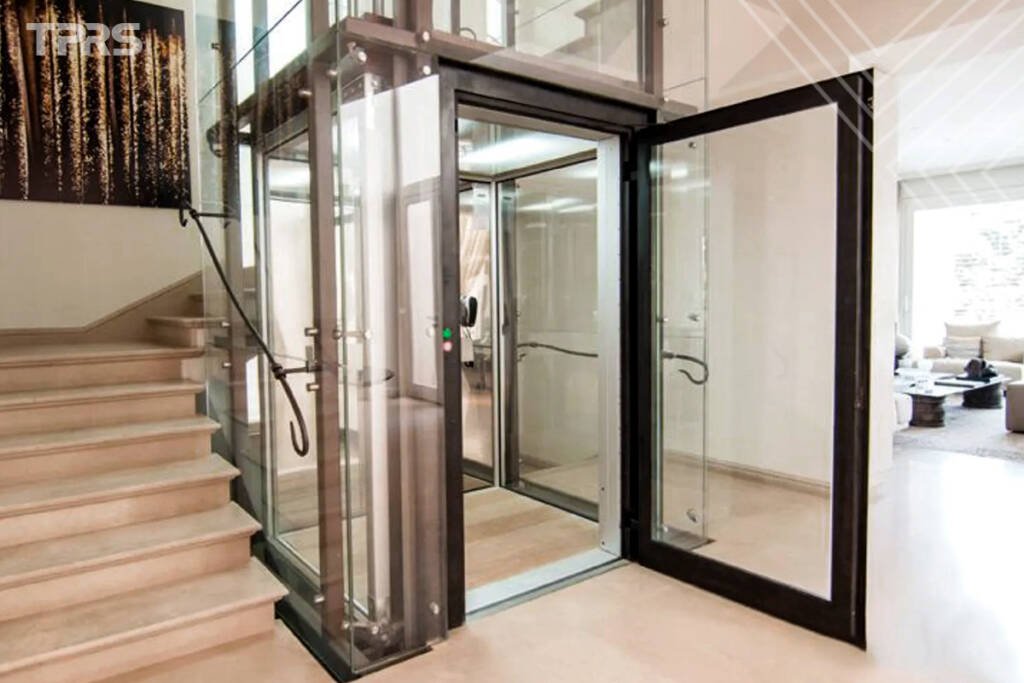
The glass specification in a panoramic elevator is the safety-critical element that most distinguishes this elevator type from conventional enclosed lifts. Every glass panel that could contact an occupant either in the car or in the shaft adjacent to the car travel path must meet specific engineering standards for structural integrity, impact resistance, and post-breakage behaviour.
2.1 Mandatory Glass Specification: Laminated Safety Glass
All glass panels in a panoramic elevator car interior, and all glass shaft panels adjacent to the car travel zone, must be specified as laminated safety glass not single-layer toughened glass alone. Laminated safety glass consists of two or more layers of glass bonded by a polymer interlayer (typically PVB polyvinyl butyral, or SGP SentryGlas® Plus for higher-performance applications). When a laminated glass panel breaks, the interlayer holds the fragments together, preventing shard dispersal into the car or onto passengers below.
The distinction between tempered (toughened) glass and laminated safety glass is a common point of confusion in Syrian elevator specifications. Tempered glass alone while stronger than annealed glass under normal loading shatters into small fragments when it breaks, and those fragments are not held in place. A broken tempered glass car panel in a passenger elevator is a particle-dispersal event. A broken laminated glass car panel holds its fragments in the interlayer until the panel can be replaced. Only laminated glass is acceptable for passenger-contact elevator applications.
2.2 Glass Specification Requirements by Location
| Glass Location | Minimum Specification | Standard Reference | Syria Commercial Recommendation |
| Car wall panels (passenger contact zone) | 10mm laminated (5+5mm with PVB interlayer) | EN 81-20, EN 12150-2 | 12mm laminated (6+6mm) for commercial higher impact resistance |
| Car wall panels (public-area elevator) | 10mm laminated, 300J pendulum impact tested | EN 81-71 | 12mm laminated with SGP interlayer higher post-breakage residual strength |
| Shaft panels (adjacent to car path) | 8mm laminated minimum | EN 81-20 | 10mm laminated for commercial more robust against cleaning and maintenance contact |
| Landing doors — full-glass specification | 6mm laminated minimum | EN 81-20 | 8mm laminated commercial door impact from trolleys and carts |
| Structural shaft panels (load-bearing glass) | Engineered per structural glass calculation | ASTM E1300, EN 13474 | Project-specific engineering Hard System commissions specialist structural glass engineer for all load-bearing glass specifications |
| Car floor — glass specification | 15mm+ laminated for walk-on glass floors | EN 81-20, BS 6206 | 20mm laminated (3-ply) for commercial walk-on floors Syrian safety margin for heavier use |
| CRITICAL WARNING: Hard System has encountered panoramic elevator specifications in Syria where single-layer tempered (toughened) glass was substituted for laminated safety glass as a cost-saving measure. This substitution is a serious safety non-compliance. A toughened glass car wall that shatters during an elevator incident from impact, structural overload, or thermal shock does not hold its fragments. It disperses glass fragments into the occupied car space. This is an unacceptable risk in any passenger elevator application. Always demand the manufacturer’s glass certification confirming laminated specification before accepting delivery. |
2.3 Glass Structural Safety Calculations
Every glass panel in a panoramic elevator structural system must be supported by documented engineering calculations demonstrating that the panel is adequate for all design loads: self-weight, wind load (for external shafts), seismic load (relevant to Syria’s seismically active regions), thermal load from temperature cycling, and any imposed loads from the elevator mechanism. These calculations must be performed or reviewed by a qualified structural engineer and documented as part of the project’s technical file.
Glass panels that are structurally undersized designed for lower loads than they actually experience do not fail suddenly; they accumulate micro-cracking over time that is not visible on the surface but progressively reduces the panel’s effective strength until it fails unexpectedly. This failure mode is specific to glass under sustained load and is one of the reasons why regular structural inspection of panoramic elevator glass is a safety requirement, not just a maintenance preference.
Section 3: The 12 Mandatory Safety Features of Every Compliant Panoramic Elevator
Every panoramic elevator installed in Syria to international safety standards must incorporate the following twelve safety features without exception. Each feature addresses a specific failure mode, and the absence of any one of them represents a compliance gap and a genuine safety risk.
| #1 Progressive Safety Gear (Parachute Device) [MANDATORY] |
| The safety gear is the primary anti-fall device for a traction elevator. It is a mechanical clamp that engages the guide rails when the elevator car descends at excessive speed triggered by the overspeed governor. A progressive safety gear applies braking force gradually (over 0.5–1.0 metres of travel) rather than instantaneously, limiting the deceleration force on passengers to levels compatible with human tolerance. EN 81-20 requires progressive safety gear for all passenger elevators with nominal speed above 1.0 m/s. Syria-Specific: For panoramic elevators in multi-floor Syrian residential towers and commercial buildings, the progressive safety gear must be sized for the actual elevator car weight which is higher for glass-wall panoramic cars than for equivalent capacity conventional cars, due to the weight of the laminated glass panels. Hard System verifies safety gear sizing calculations as part of every panoramic elevator commissioning process. |
| #2 Overspeed Governor [MANDATORY] |
| The overspeed governor monitors elevator car speed continuously during descent and triggers the safety gear when descent speed exceeds 115% of rated speed (EN 81-20 requirement). The governor is a centrifugal mechanical device that operates independently of the elevator’s electrical control system it functions even in the event of a complete electrical failure. The governor rope connects the governor to the safety gear, transmitting the mechanical trigger signal. Syria-Specific: Governor rope maintenance is a Syria-specific concern. The governor rope operates in the same dusty, thermally cycling environment as the rest of the elevator mechanical system. Hard System’s maintenance protocol includes governor rope condition inspection at every quarterly service specifically checking for corrosion, wear, and elongation that could delay governor activation. |
| #3 Buffer Devices at Pit Level [MANDATORY] |
| Buffer devices either oil hydraulic buffers or polyurethane energy-accumulating buffers are installed at the base of the elevator pit to absorb the kinetic energy of the car in the event that the car descends below the lowest landing. EN 81-20 specifies oil hydraulic buffers for elevators with nominal speed above 1.0 m/s and permits polyurethane buffers for lower speeds. The buffer must be capable of absorbing the energy of the fully loaded car at governor tripping speed. Syria-Specific: The elevator pit in a Syrian panoramic elevator installation must be waterproof both to protect the buffers from corrosion and to prevent flooding that could submerge buffer components and compromise their function. Hard System specifies waterproof pit construction and surface drainage as standard on all Syrian panoramic elevator projects, including internal drainage sumps with indicator alarms. |
| #4 Landing Door Interlocks [MANDATORY] |
| Every landing door must be equipped with a mechanical and electrical interlock that prevents the elevator from moving when any landing door is open, and prevents any landing door from opening when the elevator car is not at that floor. The interlock must be positive-acting it must physically prevent door opening rather than relying on electrical signals alone. EN 81-20 requires that the interlock engage before the door opening exceeds 50mm. Syria-Specific: Landing door interlock maintenance is critical in Syrian commercial buildings where doors experience high-frequency use from retail and hospitality operations. Hard System’s monthly maintenance protocol includes functional testing of all landing door interlocks verifying both the mechanical and electrical elements are operative. Interlock failure is one of the most common elevator safety incident causes in Middle East commercial buildings. |
| #5 Car Door Safety Edge [MANDATORY] |
| The car door where fitted must have a safety edge or presence detection system that reverses door closure on contact with a person or object. For panoramic elevators with full-height glass doors, the safety edge must function across the full door height, not just at a single level. EN 81-20 specifies maximum permissible closing force (150N) and maximum kinetic energy at contact (10J) to limit injury risk from door closure. Syria-Specific: Glass car doors in panoramic elevators are heavier than steel doors of equivalent dimensions which increases the kinetic energy available during door closure. Safety edge sensitivity calibration must be verified for the actual glass door weight at every maintenance visit. Hard System verifies car door safety edge function and force measurement at every monthly service. |
| #6 Emergency Stop Buttons Landing and Car [MANDATORY] |
| Emergency stop buttons must be installed inside the car and at every landing level. The car stop button must be clearly marked, readily accessible, and must stop the car immediately when activated. Landing stop buttons must be positioned where they are accessible in an emergency without requiring entry into the elevator shaft zone. EN 81-20 specifies yellow background with red button and ‘STOP’ labelling as minimum marking requirements. Syria-Specific: In Syrian luxury residential applications, building owners sometimes request that emergency stop buttons be aesthetically minimised smaller, less visible, or integrated into custom panels. Hard System maintains the EN 81-20 minimum size, colour, and labelling requirements for all emergency stops regardless of aesthetic pressure these safety requirements exist because they must be findable and operable under stress. |
| #7 Rescue / Emergency Communication System [MANDATORY] |
| Every passenger elevator must have a means of two-way voice communication between the trapped occupant and a continuously monitored location. EN 81-20 requires that this communication function be available for a minimum of 1 hour after mains power failure (battery backup). For commercial buildings, the communication must connect to a location that is staffed 24/7. For residential elevators, the communication must connect to the occupant or a monitoring service. Syria-Specific: In Syrian residential luxury buildings where the elevator serves a private residence, the rescue communication system must connect to a location where someone will actually respond typically the homeowner’s mobile phone (via GSM module) or a 24/7 monitoring service. Hard System commissions GSM-based rescue communication systems in all residential panoramic elevator installations, configured to call a primary and backup number simultaneously on activation. |
| #8 UPS Emergency Lowering System [MANDATORY IN SYRIA] |
| While not universally mandated in all international codes, emergency lowering on power failure is a practical safety requirement in Syria’s power supply environment. A UPS system maintains sufficient power to lower the elevator car to the nearest floor and open the landing door, allowing safe egress after a mains power failure. Without this system, a power failure leaves passengers trapped in a glass cabin visible to bystanders but inaccessible until power is restored. Syria-Specific: Hard System classifies UPS emergency lowering as mandatory for all Syrian elevator installations residential or commercial, conventional or panoramic. Syria’s documented power interruption frequency (multiple times weekly in some areas) makes UPS emergency lowering not merely a comfort feature but a basic safety provision. UPS capacity must be sufficient to lower the fully loaded car from the highest floor to the nearest landing not just a partial descent. |
| #9 Overspeed and Underspeed Monitoring [MANDATORY] |
| Modern elevator control systems must monitor both overspeed (car moving faster than permitted in any direction) and underspeed (car failing to maintain minimum speed under load which can indicate brake failure or drive system deterioration). The control system must detect both conditions and initiate a controlled stop. Overspeed monitoring supplements the mechanical overspeed governor as an electrical early-warning layer. Syria-Specific: In Syrian commercial panoramic elevators with high-cycle operation, underspeed monitoring is particularly important because drive belt or motor deterioration under sustained load is more likely to develop gradually in the Syrian dust and heat environment. Hard System’s control board specifications for Syrian commercial panoramic elevators include underspeed monitoring as a standard parameter, with trip thresholds set at 80% of rated speed. |
| #10 Anti-Reversal Device (Ascending Car Overspeed Protection) [MANDATORY] |
| EN 81-20 requires protection against ascending car overspeed a failure mode where the car moves upward at excessive speed (caused by counterweight imbalance or drive system failure during ascent). The ascending car overspeed protection device must stop the car within the allowed overspeed range without causing deceleration forces that would injure passengers. This is a relatively recent addition to elevator safety requirements, first mandated by EN 81-20 in 2014. Syria-Specific: Ascending car overspeed incidents are statistically less common than descending overspeed events but can be more dangerous because standard safety gears only operate on the downward direction of travel. Hard System specifies bidirectional safety systems for all Syrian panoramic elevator installations at commercial and hotel specifications providing ascending car protection as standard rather than as an optional upgrade. |
| #11 Load-Weighing Device [MANDATORY] |
| Every elevator must incorporate a load-weighing device that prevents departure when the car is overloaded beyond its rated capacity. The device must activate an audible and/or visual alarm and prevent door closure when overloaded. EN 81-20 requires the load-weighing device to be accurate within ±5% of rated load. For panoramic elevators, the device must account for the weight of the glass car panels in its tare weight calibration. Syria-Specific: Glass car panels in a panoramic elevator add significant dead weight to the car typically 200–500 kg more than an equivalent conventional car. Load-weighing calibration must be performed with the full glass panel complement installed and verified at annual inspection. Hard System includes load-weighing device calibration verification as a mandatory item in every annual panoramic elevator inspection report. |
| #12 Fire Service Operation Mode |
| Commercial elevator installations must include a fire service operation mode (Phase 1 and Phase 2 recall, per EN 81-72 / local fire code requirements) that recalls the elevator to the designated fire recall floor when the building’s fire alarm activates. In Phase 1, the elevator parks at the recall floor with doors open. In Phase 2, a designated fire service key enables manual control for fire service use. Syria-Specific: Syrian commercial building fire safety requirements are evolving toward international standards. Hard System installs fire service operation mode as standard on all commercial panoramic elevator projects including coordination with the building’s fire alarm panel through a potential-free contact interface. For Syrian luxury residential applications, fire recall is increasingly specified by developers Hard System recommends it for any residential building with more than 4 floors. |
Section 4: Glass Structural Safety The Engineering Behind Safe Transparent Shafts
The structural safety of a panoramic elevator’s glass shaft is an engineering discipline distinct from the elevator’s mechanical and electrical safety systems. It requires specialist structural glass engineering knowledge that is separate from and additional to standard elevator installation expertise.
4.1 Design Load Requirements
Every glass panel in a panoramic elevator shaft must be designed to resist the following load categories: permanent load (the panel’s self-weight), variable loads (wind pressure for external shafts, human impact load for car interior panels, maintenance loads during glass cleaning), accidental loads (impact events either from elevator mechanism contact or from external objects), thermal loads from temperature differential between indoor and outdoor surfaces, and seismic loads where applicable.
Syria’s seismic context is particularly relevant for panoramic elevator glass design. Syria lies in a seismically active zone, and structural glass panels must be designed to remain intact during a seismic event of the intensity appropriate for the installation location. The structural glass design must account for in-plane racking loads on the shaft panels the lateral movement of the building frame relative to the elevator shaft and must use fixing systems that allow limited relative movement without panel fracture.
4.2 Thermal Safety Syrian Summer Conditions
Thermal stress in glass panels is caused by temperature differential between the centre of the panel (exposed to sunlight) and the edges (shaded by the frame). This differential creates tensile stress at the glass edges the most vulnerable location in a tempered glass panel. For Syrian panoramic elevator installations, particularly those with south or west-facing glass shaft panels, the thermal stress calculation must account for peak summer temperatures that can produce centre-edge temperature differentials of 30–45°C.
The required edge clearance in the fixing frame the gap between the glass panel edge and the metal frame must be sufficient to accommodate thermal expansion without panel constraint. Thermal stress fracture in panoramic elevator glass panels, while uncommon in correctly specified installations, is one of the failure modes most directly attributable to inadequate thermal engineering in the design phase.
4.3 The Role of the Laminate Interlayer in Post-Breakage Safety
When a laminated safety glass panel breaks from any cause the interlayer’s residual strength determines whether the broken panel remains in place (allowing continued safe operation of the elevator until the panel can be replaced) or collapses into the shaft or car (a hazardous condition requiring immediate elevator shutdown). The interlayer specification is therefore a safety parameter, not just a material specification.
PVB (polyvinyl butyral) interlayer the most common laminated glass interlayer provides adequate post-breakage residual strength for most residential panoramic elevator applications. SGP (SentryGlas® Plus) interlayer a stiffer, stronger ionoplast material provides 100× higher post-breakage stiffness than PVB and is the appropriate specification for commercial-public panoramic elevators, for large glass panels, and for any application where a broken panel must support its own weight for an extended period before replacement.
Section 5: Syria-Specific Safety Considerations
International safety standards are written for average global conditions. Syria’s specific combination of power supply instability, seismic activity, extreme summer temperatures, high UV radiation, and evolving regulatory environment creates safety considerations that go beyond what international standards explicitly require.
5.1 Power Supply Safety The Syrian Requirement
Syria’s power grid delivers voltage fluctuations of ±15–25% and periodic frequency deviations that affect elevator safety systems in ways that international standards do not address. The safety circuit board which monitors all safety devices and prevents elevator operation when any safety circuit is open is sensitive to voltage conditions. An under-voltage event that is outside the control board’s operating range can cause the safety circuit to appear satisfied (all green) while actually being in an undefined state. AVR voltage regulation is a mandatory safety provision in Syria, not a comfort upgrade.
The UPS emergency lowering system must be sized for Syria’s power interruption frequency. In areas with multiple daily interruptions, UPS battery health degrades more rapidly than in areas with occasional outages requiring more frequent battery capacity testing. Hard System’s Syrian panoramic elevator maintenance protocol includes quarterly UPS battery capacity testing rather than the annual testing that international standards require.
5.2 Seismic Considerations
Syria’s seismic zone classification requires structural consideration in elevator shaft design. While Syrian national building codes are being updated to reflect current seismic risk maps, Hard System’s panoramic elevator specifications proactively apply seismic design principles from EN 81-77 (Elevators Subject to Seismic Conditions) for all commercial and multi-floor residential panoramic elevator installations. Key seismic provisions include: guide rail and bracket systems designed for lateral loads, glass shaft panel fixings that allow limited racking without panel fracture, and pit buffer systems anchored for seismic forces.
5.3 Thermal Safety in Syrian Climate
Syrian summer peak temperatures create thermal conditions that affect elevator safety in several specific ways. Elevator control board components rated for 40°C ambient operate at their design limit in Syrian summer conditions creating elevated component failure rates that are a safety concern, not just a maintenance cost concern. Hard System specifies control boards with 50°C ambient rating and adequate machine room ventilation for all Syrian panoramic elevator installations.
Glass thermal stress in Syrian summer conditions, as described in Section 4.2, requires specific safety margins that exceed European standard calculations. Hard System’s glass specifications for Syrian panoramic elevators add a 25% thermal stress safety margin to the calculated EN 13474 values a conservative approach that has proved appropriate for Syrian climate conditions across multiple installations.
5.4 Regulatory Compliance in Syria Current Status
Syria’s regulatory framework for elevator safety is evolving. The relevant technical authority for elevator installation approval is the municipality engineering department or the relevant ministry of works, depending on building classification and governorate. Approval requirements vary between governorates and building types with major Damascus and Aleppo commercial projects facing more structured approval processes than equivalent projects in secondary cities.
Hard System manages the complete regulatory approval process for all panoramic elevator installations preparing technical documentation, submitting permit applications, coordinating inspection visits, and obtaining commissioning certificates. For projects requiring international-standard documentation (international brand hotels, foreign-investor developments), Hard System prepares technical files complying with European CE documentation requirements even where Syrian regulation does not yet explicitly mandate them.
Section 6: Inspection, Testing, and Certification
A panoramic elevator that is designed and installed to safety standards must be verified through a structured inspection and testing process before it enters passenger service, and must be subject to periodic re-inspection throughout its operational life. The following framework documents the required inspection and testing programme.
6.1 Pre-Commissioning Inspection and Testing
Before any panoramic elevator is placed into passenger service, it must complete a series of commissioning tests that verify all safety systems are operative and all design parameters are met. Hard System’s commissioning process for Syrian panoramic elevators includes the following mandatory tests.
| Test | Procedure | Pass Criterion | Documentation |
| Full-load test | Operate elevator at 125% of rated load for minimum 30 minutes in all modes | No abnormal noise, vibration, or system fault | Test report signed by commissioning engineer |
| Safety gear test | Trigger safety gear at rated speed with 125% load | Car stops within EN 81-20 stopping distance; no damage to guide rails | Video record + measurement report |
| Buffer test | Drive car onto buffer at rated speed with empty car | No structural damage; car returns to normal travel | Inspector witness report |
| Landing door interlock test | Attempt operation with each landing door open in sequence | Car does not move with any door open | Checklist signed by commissioning engineer |
| Car door safety edge | Apply 150N force to door at closure | Door reverses within specified kinetic energy limit | Force measurement log |
| Emergency communication test | Activate from inside car with mains power disconnected | Voice communication established within 30 seconds | Test log with timestamp |
| UPS emergency lowering test | Disconnect mains power with car at highest floor | Car lowers to nearest floor and door opens within 60 seconds | Test report + battery voltage log |
| Overspeed governor test | Verify governor triggers at 115% of rated speed | Governor engages within rated overspeed tolerance | Calibration certificate |
| Load-weighing device | Load car to rated capacity, then add 5% | Alarm activates, departure prevented | Calibration report |
| Glass panel inspection | Visual and structural check of all glass panels post-installation | No chips, cracks, fixing movement, or sealant gaps | Photographic record |
6.2 Periodic Re-Inspection Requirements
After commissioning, panoramic elevators must be subject to periodic inspection to verify continued compliance with safety standards. The required inspection intervals depend on the building type, usage frequency, and regulatory requirements.
| Inspection Type | Recommended Interval | Scope | Authority |
| Monthly preventive maintenance inspection | Monthly | Full mechanical, electrical, and glass safety check | Authorised maintenance provider (Hard System) |
| Periodic safety inspection | Annually | Full safety system functional testing, load test, glass structural assessment | Hard System or authorised third-party inspector |
| Regulatory periodic inspection | Every 1–2 years (Syria) | Authority-witnessed safety inspection for certificate renewal | Municipal/ministry engineering authority |
| Major overhaul inspection | Every 10–12 years | Full drive system, control system, glass panel, and structural assessment | Certified elevator engineer |
Section 7: The Safety Compliance Verification Checklist for Syrian Buyers
Every Syrian building owner, architect, or developer specifying a panoramic elevator should use the following checklist to verify that a proposed installation meets minimum safety standards before any contract is signed.
- Glass specification: confirm in writing that all car interior and shaft panels are laminated safety glass
- Glass certification: request the glass supplier’s laminated glass certificate showing the interlayer type, panel dimensions, and test standard compliance
- EN 81-20 compliance: request written confirmation that the installation design complies with EN 81-20 and, for commercial applications, EN 81-71
- Safety gear: confirm progressive safety gear is specified (not instantaneous catch type) and sized for the actual glass car weight
- UPS emergency lowering: confirm the UPS system is sized for full-load lowering from the highest floor to ground, not just partial travel
- AVR voltage regulation: confirm AVR is included and rated for Syria’s voltage range (output ±3% from 380V input ranging ±20%)
- Landing door interlocks: confirm both mechanical and electrical interlock are specified and are verified in the commissioning test programme
- Overspeed governor: confirm governor calibration certificate will be provided at commissioning
- Emergency communication: confirm GSM backup is included for power-fail communication in residential applications
- Glass structural calculations: confirm a structural glass engineering calculation package is included in the project technical file
- Seismic design: for commercial buildings, confirm EN 81-77 seismic provisions are applied to guide rail and glass fixing design
- Fire service mode: for commercial applications, confirm Phase 1 and Phase 2 fire recall is specified and connected to the building fire alarm
- Commissioning test programme: request a copy of the commissioning test protocol before procurement
- Installer authorisation: confirm the installer holds manufacturer authorisation for the specific brand being installed
Related Resources from Hard System
For a comprehensive guide to budgeting your panoramic elevator project, read our detailed article on panoramic elevator costs in Syria covering every price variable and hidden cost.
Homeowners considering a glass elevator for a luxury residence will find our guide to residential glass lifts in Syria the most comprehensive specification reference available in the Syrian market.
Frequently Asked Questions (FAQ)
Q1: Does my panoramic elevator in Syria need to comply with EN 81 standards?
Syrian national building codes do not yet explicitly mandate EN 81 compliance by name. However, all insurance policies from international underwriters, all international hotel brand technical standards, and all specifications submitted to serious commercial developers in Syria reference EN 81 as the applicable technical standard. For any panoramic elevator installation in Syria residential or commercial Hard System recommends and implements EN 81-20 compliance as the design baseline, because this is the standard that protects occupants and building owners from liability in the event of an incident.
Q2: What is the difference between tempered glass and laminated safety glass for elevator applications?
Tempered (toughened) glass is a single-layer glass that has been heat-treated to increase its surface strength. When it breaks, it shatters into thousands of small fragments the familiar ‘pebble’ pattern. Laminated safety glass consists of two or more glass layers bonded by a polymer interlayer. When it breaks, the interlayer holds the fragments together, maintaining the panel as a structural unit rather than dispersing fragments. Only laminated glass is acceptable for passenger-contact elevator applications under EN 81-20. Using tempered-only glass in an elevator car interior or structural shaft panel is a safety non-compliance.
Q3: How often does a panoramic elevator in Syria need a formal safety inspection?
Hard System recommends three levels of inspection: monthly preventive maintenance (mechanical, electrical, and glass safety check by Hard System’s maintenance team), annual formal safety inspection (full safety system testing including load test, overspeed governor check, and glass structural assessment), and regulatory periodic inspection by the relevant Syrian authority (currently every 1–2 years for commercial buildings in major cities). The monthly preventive maintenance is the most important layer it is the programme that catches developing issues before they become safety events.
Q4: My panoramic elevator is installed without a UPS emergency lowering system. Is it safe to operate?
In the Syrian context, a panoramic elevator without UPS emergency lowering is operating with an unacceptable safety gap. The frequency of power interruptions in Syria means that a passenger entrapment in a glass cabin between floors is not a theoretical risk it is an event that will occur if the elevator operates long enough without UPS protection. Hard System can retrofit UPS emergency lowering systems to most existing elevator installations the cost is USD 800–2,000 depending on the UPS capacity required. This is a safety investment that should be made without delay on any Syrian panoramic elevator currently operating without it.
Q5: What should I do if I notice a crack or chip in one of my panoramic elevator’s glass panels?
Stop passenger operation immediately and contact Hard System for an emergency glass assessment. Do not resume passenger operation until the assessment is complete. A crack in a glass elevator panel whether in the car or in the shaft is a structural defect that may compromise the panel’s ability to meet its design load requirements. The assessment determines whether the panel must be replaced immediately (fracture extending from an edge or penetrating the laminate interlayer) or whether temporary continued operation is safe while a replacement panel is ordered. Never continue passenger operation with a cracked glass panel without a qualified engineer’s written clearance.
Q6: Can I add safety features to an existing panoramic elevator that was installed without full compliance?
Yes most safety features can be retrofitted to existing panoramic elevator installations. UPS emergency lowering, AVR voltage regulation, upgraded landing door interlocks, load-weighing device calibration, and emergency communication system upgrades are all available as retrofit installations. Glass panel replacement to laminated safety glass specification is also available for installations that originally used single-layer tempered glass. Hard System offers a comprehensive safety compliance audit for existing panoramic elevator installations assessing the current safety status and providing a prioritised remediation plan with costs.
Q7: Who is responsible for the safety of a panoramic elevator ?
Both with distinct responsibilities. The building owner is legally responsible for ensuring that the elevator in their building is maintained in a safe condition and is operated in compliance with applicable regulations. The maintenance company is contractually responsible for the quality of the maintenance services they provide. A maintenance company that fails to identify a developing safety defect that results in an incident may share liability with the building owner. Hard System’s maintenance contracts explicitly document the scope of our safety responsibilities and provide written service reports after every visit creating a documented record that protects both parties.
Q8: What documentation should I receive at the commissioning of my panoramic elevator?
At commissioning, you should receive: the commissioning test report (covering all tests listed in Section 6.1) signed by the commissioning engineer, the overspeed governor calibration certificate, the load-weighing device calibration report, the glass panel supplier’s laminated glass certificates for all panels, the structural glass engineering calculation package, the AVR and UPS specification and test records, the emergency communication system test log, the as-built electrical schematic drawing, the operation and maintenance manual for the specific installation, and the 12-month installation warranty certificate. Hard System provides all of these documents as a standard commissioning deliverable not on request.
Conclusion: Safety Standards Are the Reason Your Panoramic Elevator Is Worth Trusting
A panoramic elevator is a remarkable object transparent, architectural, experiential in a way that conventional elevators are not. Its beauty comes from glass, and its safety comes from engineering. The standards documented in this guide EN 81-20, EN 81-71, laminated glass specifications, progressive safety gears, UPS emergency lowering, and the full complement of mandatory safety devices are not bureaucratic obstacles to installation. They are the accumulated engineering knowledge of decades of elevator incident analysis, translated into the specific requirements that make a glass elevator as safe as it is beautiful.
In Syria’s specific environment with its power instability, seismic context, extreme temperatures, and evolving regulatory landscape meeting these standards requires an installer who understands both the international requirements and the local realities. It requires glass engineering expertise, not just elevator installation capability. It requires a maintenance programme that keeps safety systems current over the elevator’s operational life. And it requires documentation that gives building owners defensible evidence of compliance.
Hard System installs every panoramic elevator in Syria to EN 81-20 as the minimum standard not as a premium option. Our commissioning documentation package includes every safety certificate and test report described in this guide. Our maintenance contracts maintain safety compliance through the elevator’s full operational life. And our team is available to assess any existing panoramic elevator installation that has not been certified to current standards.
| Is Your Panoramic Elevator Compliant with International Safety Standards? Hard System offers a free safety compliance audit for existing Syrian panoramic elevator installations assessing glass specification, safety device function, and documentation completeness. We also provide a full EN 81-20 compliant installation service for new projects. |