Introduction — Why Elevator Shaft Requirements Matter
Poor shaft planning is the #1 cause of costly rework and failed inspections in Damascus-area elevator projects.
Shaft dimensions are permanent decisions. Once concrete is poured, the structural envelope dictates which elevator types are viable, what equipment configurations are possible, and whether the installation will pass mandatory third-party inspection. Getting these parameters right before a single shovel breaks ground is not just good practice — it is the difference between a smooth project and an expensive crisis.
Syrian building codes and the internationally adopted EN 81-20/50 standards both mandate correct shaft specification from day one. Hard System offers no-cost pre-pour shaft audits that catch design errors before they become structural problems. The sections below walk through every technical requirement your building team needs to know.
Core Elevator Shaft Requirements — Dimensions, Clearances & Structure
Minimum Pit Depth & Overhead Clearance
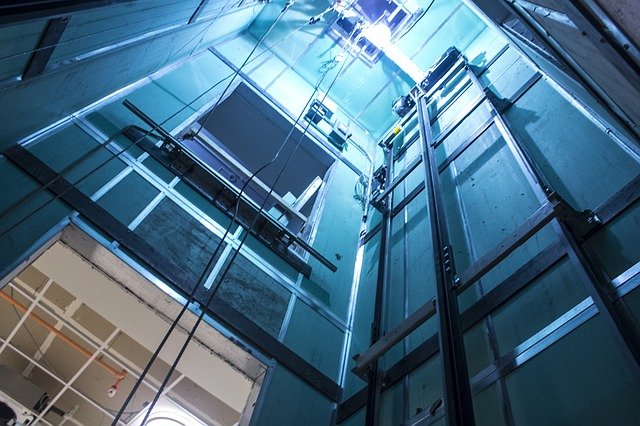
The pit and headroom are the two most frequently under-specified shaft parameters on Damascus construction sites. Both are safety-critical: insufficient pit depth prevents the activation of safety buffers, while inadequate headroom puts maintenance technicians at risk during top-of-car work.
- Standard pit depth: 1,000–1,500 mm depending on elevator speed and type (traction vs. hydraulic).
- Overhead clearance (headroom): minimum 3,500 mm above the highest landing to allow safe top-of-car maintenance.
- Under-specified pits cause safety device failure, failed inspections, and voided manufacturer warranties.
- Slab-on-grade construction in older Damascus districts requires specialist retrofit pit solutions — Hard System has delivered 30+ such projects across the city.
Shaft Width, Depth & Interior Tolerances
Internal shaft dimensions must accommodate not just the elevator car, but also the counterweight travel zone, guide rails, and all required clearances. A shaft that is even 50 mm too narrow in the wrong dimension may require a complete equipment redesign.
- Clear internal shaft dimensions must account for car + counterweight + guide rail clearances (typically +200 mm each side of the car).
- Plumb tolerance: shaft walls must not deviate more than ±25 mm over the full shaft height — verified by laser survey before equipment is ordered.
- Wall material: reinforced concrete (minimum 150 mm thick) or equivalent fire-rated masonry with a smooth interior finish.
- Protruding rebar is the most common defect found on Damascus construction sites — Hard System’s pre-audit checklist specifically flags this before installation begins.
Structural Load & Seismic Considerations
An elevator shaft is not a passive enclosure. Traction elevators in particular transmit significant dynamic and lateral forces into the surrounding structure through guide rail brackets, overhead machinery, and buffer impacts at the pit floor. These loads must be engineered into the structural drawings — not assumed within general building loads.
- Shaft walls must be designed to carry guide rail bracket loads throughout the full travel height.
- Buffer loads at the pit floor must be specifically engineered into the foundation slab as point loads.
- Damascus sits in a seismically active region — shaft design should reference Syrian seismic classification maps and apply appropriate load factors.
- Hard System’s engineers coordinate load path validation with the structural engineer of record before any steel is ordered or fabricated.
Reference Shaft Dimensions by Elevator Type:
| Elevator Type | Clear Shaft (W×D) | Pit Depth | Headroom | Special Requirement |
| Traction (Residential) | 1,600 × 1,600 mm | 1,000–1,200 mm | 3,500 mm | Machine room or MRL beam |
| Traction (Commercial) | 2,000 × 2,200 mm+ | 1,200–1,500 mm | 3,500–4,000 mm | Machine room or MRL beam |
| Hydraulic (2–5 floors) | 1,500 × 1,800 mm | 1,500 mm min. | 3,500 mm | Separate HPU room required |
| MRL Compact | 1,100 × 1,100 mm | 1,000 mm min. | 3,500 mm | Reinforced overhead beam |
| Home / Villa Lift | 900 × 900 mm min. | 750–1,000 mm | 3,000 mm min. | Load-bearing walls required |
Elevator Shaft Requirements by Elevator Type
Traction (Geared & Gearless) Elevators
Traction elevators are the dominant type in Damascus high-rise residential and commercial construction. They use a motor and sheave to move the car and counterweight via steel ropes, delivering smooth, high-speed performance over many floors.
- Machine room required (minimum 2,000 mm headroom, 750 mm clearance around all equipment) OR machine-room-less (MRL) adaptation with overhead drive unit.
- Shaft must accommodate traveling cables, counterweight travel zone, and — for buildings above 30 m — compensation ropes.
- Hard System has installed 100+ traction elevator units across Damascus; gearless traction is recommended for premium residential projects due to lower noise, higher energy efficiency, and longer service life.
- Gearless machines eliminate the need for gearbox oil maintenance and reduce vibration transmission to the building structure.
Hydraulic Elevators
Hydraulic elevators are well-suited to lower-rise applications where traction systems would be oversized. They offer a smaller shaft footprint but introduce hydraulic fluid management requirements.
- Smaller shaft footprint than traction, but requires a separate machine room for the hydraulic power unit (HPU) at basement or ground-floor level.
- Pit depth minimum: 1,500 mm for a standard 2:1 roping hydraulic jack configuration.
- Ideal for 2–5 storey buildings, private villas, and low-traffic commercial properties in Damascus suburbs and rural Damascus.
- Oil leak containment — a bunded pit tray — is increasingly required for environmental compliance and insurance purposes.
Machine-Room-Less (MRL) & Residential Elevators
MRL technology has transformed the options available for low-to-mid-rise buildings by eliminating the need for a dedicated machine room. Compact residential lifts extend these benefits to private homes and villas.
- MRL shafts require a structurally reinforced overhead beam to mount the drive unit — this must appear in structural drawings at design stage, not be added as an afterthought.
- Compact residential lifts can use shafts from 900 × 900 mm clear internal dimension, but require dedicated load-bearing walls on all sides.
- Growing demand in Damascus luxury apartments and private villas along the Qudsaya and rural Damascus corridor.
- Hard System offers turnkey MRL solutions — shaft design review, equipment supply, and installation under one contract, with a single point of accountability.
Electrical & Mechanical Shaft Preparation Requirements
The mechanical and electrical preparation of the shaft is as critical as its physical dimensions. Deficiencies here are common causes of failed commissioning inspections and ongoing operational problems.
Power Supply & Dedicated Circuits
DAMASCUS CRITICAL: Daily grid outages make UPS/ARD systems a practical necessity on every project — Hard System specifies and sizes these as standard.
- Dedicated 3-phase supply (380 V) from the main distribution board to the machine room — no shared circuits with other building loads.
- A dedicated isolator switch must be accessible at the machine room entrance per EN 81-20 §5.10.
- Cable conduit inside the shaft must be fire-rated and secured at maximum 500 mm intervals to prevent cable movement during operation.
- Generator interlock wiring must be incorporated in the shaft electrical layout from the outset — retrofitting is expensive and disruptive.
Lighting, Ventilation & Emergency Systems
- Shaft lighting: minimum 50 lux at pit floor, 20 lux at all working points — permanent fixtures at top and bottom of shaft.
- Pit must include a GFCI-protected 230 V socket outlet and a local stop/isolation switch within easy reach of the pit floor.
- Ventilation is critical in Damascus: ambient temperatures exceed 40°C in summer months. Shaft heat buildup degrades control electronics and can trigger thermal protection shutdowns. Mechanical extraction is often required for shafts with east or south exposure.
- Emergency intercom: car-to-machine-room and car-to-building-entrance communication is mandatory under EN 81-20 §5.4.
Waterproofing & Pit Drainage
The elevator pit sits below grade in most applications, making it inherently vulnerable to groundwater and surface water infiltration. This is particularly relevant in Damascus, where older districts feature high water tables and basements prone to seasonal flooding.
- Pit must be fully waterproofed — groundwater infiltration is a recurring and damaging problem across many Damascus construction sites.
- A sump pump or drainage point must be incorporated where seasonal flooding or a high water table is identified during site survey.
- Pit floor: level, smooth, slip-resistant finish; all junction boxes must be rated to IP54 minimum to resist moisture ingress.
- Hard System specifies tanking-grade waterproofing membranes for all pit civil works and provides a 5-year waterproofing warranty on projects where we manage the civil scope.
Elevator Shaft Requirements & Syrian Building Code Compliance
Regulatory compliance is not optional, and it is not simply a box-ticking exercise. A non-compliant installation cannot legally operate, cannot be insured, and cannot be sold with the building. Hard System’s approach is to build compliance into every stage of the process — not to chase it at the end.
- The Syrian National Building Code references the EN 81 series as the technical standard for all elevator installations — Hard System operates to both frameworks simultaneously on every project.
- Mandatory third-party inspection before first use covers the shaft, pit, machine room, car, and all safety systems. A single non-conformance halts the entire handover process.
- Documentation Hard System delivers with every project: engineer-stamped technical drawings, EN 81-20/50 compliance certificates, load test records, and a post-installation inspection report.
- Navigating Damascus municipality approval requires established relationships and a thorough understanding of local procedures — Hard System manages the entire permitting workflow on behalf of clients, from initial application to final sign-off.
Step-by-Step Building Preparation Checklist
The following six-stage framework reflects Hard System’s standard project workflow for Damascus new-build and retrofit installations. Each stage has a defined outcome; no stage begins until the previous one is verified as complete.
| Stage | Action Required |
| Stage 1 — Design | Confirm shaft dimensions with elevator supplier before structural drawings are finalized — zero cost to change at this point. |
| Stage 2 — Civil Works | Pit construction, shaft walls, overhead beam (MRL), and machine room built to approved drawings with tolerance verification. |
| Stage 3 — MEP Rough-In | Electrical conduit, dedicated power circuit, lighting, ventilation, and drainage installed and tested. |
| Stage 4 — Pre-Installation Audit | Hard System site inspection to verify all shaft parameters before equipment is dispatched — prevents last-minute delays. |
| Stage 5 — Installation & Commissioning | Steel structure, rails, car, doors, and controls installed; full load and safety tests performed to EN 81 protocol. |
| Stage 6 — Handover | Certificate of compliance issued, operators trained, maintenance contract signed, 24/7 support activated. |
Common Elevator Shaft Preparation Mistakes in Damascus Projects
The same errors appear repeatedly on Damascus construction sites. All of them are preventable at zero cost with early contractor engagement — and all of them are expensive to fix after the fact.
- Shaft built to wrong dimensions because the elevator specification changed after structural drawings were issued and no re-coordination took place.
- Pit depth sacrificed to gain an extra parking space in the basement — a short-sighted decision that typically delays the entire project by four to eight weeks.
- No conduit installed for the traveling cable, forcing surface-mounted wiring that violates EN 81 requirements and fails inspection.
- Shaft opening left unguarded during construction, creating a serious fall hazard and triggering safety hold-notices from the site supervisor.
Hard System’s free early-stage consultation has prevented all four of the above scenarios across dozens of Damascus projects. Engage us at design stage — not after the slab is poured.
FAQ — Elevator Shaft Requirements
Q: What is the minimum shaft size for a standard 8-person elevator?
The typical clear shaft for an 8-person traction elevator with a rear-counterweight layout is 1,700 mm (W) × 1,900 mm (D). Exact dimensions depend on car size, door type (centre-opening vs. side-opening), and the specific manufacturer’s equipment envelope. Always confirm with your elevator supplier before structural drawings go to tender — Hard System provides this service free of charge.
Q: Can elevator shaft requirements be modified after the building is constructed?
Modifications are possible but costly. Pit extensions require underpinning the existing slab; shaft widening requires structural demolition, temporary propping, and rebuilding. In most cases, the programme impact exceeds the financial cost. Early consultation with Hard System eliminates this risk at zero cost. Some MRL solutions can adapt to slightly non-standard shafts through customised rail and bracket engineering — ask our technical team about your specific case.
Q: What backup power provisions are required for elevators in Syria?
EN 81-1 requires an Automatic Rescue Device (ARD) as a minimum. Given Damascus grid reliability, Hard System recommends and specifies full UPS integration on all projects — sized to return the car to the nearest floor and open the doors safely. Generator interlock wiring must be designed into the shaft electrical layout from the outset, not retrofitted after commissioning.
Q: How long does elevator shaft preparation typically take in Damascus?
Civil works (pit + shaft walls + machine room) typically require 2–6 weeks depending on building height and site conditions. MEP rough-in adds 3–5 working days once civil trades have cleared. The Hard System pre-installation audit takes one full day on-site. Total preparation to installation-ready: typically 3–8 weeks for a Damascus new-build project under normal site conditions.
Why Hard System Is Damascus’s Trusted Elevator Partner
Choosing the right elevator partner is as important as choosing the right equipment. An installation that meets code on paper but fails in practice — due to poor shaft coordination, missed timelines, or inadequate post-handover support — is not a successful project.
- 10+ years delivering compliant elevator installations across Damascus city and rural Damascus — with zero failed final inspections on record.
- In-house capability covers structural review, electrical design, and full installation under one contract — no coordination gaps between sub-contractors, no finger-pointing when problems arise.
- Proprietary pre-pour shaft checklist developed over hundreds of Damascus projects — eliminates the most common and costly on-site errors before they occur.
- Established working relationships with Damascus municipality inspection offices ensure smooth, fast permit clearance.
- Full lifecycle support: shaft audit on day one → equipment supply and installation → 24/7 emergency maintenance after handover → annual compliance certification renewal.
Get Your Free Elevator Shaft Assessment
Before you pour concrete, let Hard System (best elevators company in Syria )review your elevator shaft drawings — free of charge.
Pingback: Panoramic Elevator Costs in Syria | Full Guide