Why Choosing the Right Elevator Type Matters for Your Residential Building
Selecting the wrong elevator type for a residential building is not merely an aesthetic misstep it carries measurable consequences for safety, operating costs, and the long-term satisfaction of every resident who steps through those doors. Before any equipment is specified, it is worth understanding precisely what is at stake.
- The elevator type you choose directly determines your long-term safety profile, maintenance cycles, and how tenants perceive the building. A system mismatched to its application will demand more frequent intervention, generate more unplanned downtime, and produce lower tenant satisfaction scores year after year.
- The real cost of a wrong choice goes far beyond the purchase price. Retrofitting an unsuitable system widening a hoistway, adding a machine room that was never planned, or replacing hydraulic infrastructure that cannot cope with the building’s traffic typically costs two to three times the original installation. Add extended downtime, tenant disruption, and potential legal liability for non-compliant equipment, and the stakes become clear.
- Damascus presents a particularly varied building stock: the city encompasses 3-storey villas in residential neighbourhoods, 8-storey mid-rise apartment blocks, and 20-floor towers in districts such as Mazzeh, Kafr Souseh, and Malki. No single elevator type serves all of these profiles optimally. The right solution depends on the specific building, its occupants, and its infrastructure context.
- Hard System’s approach begins with a free site assessment a structured technical evaluation of your building before any commercial recommendation is made. No specification, no quotation, and no pressure until the engineering picture is complete.
The Main Types of Elevators for Residential Buildings
The following five categories represent the primary residential elevator technologies available in the Damascus market today. Each is suited to a specific building profile, and each carries a distinct set of technical, economic, and regulatory considerations.
1. Traction (Electric Cable) Elevators
Traction elevators operate by suspending the car on steel wire ropes that pass over a grooved sheave (pulley) driven by an electric motor. Two variants exist: geared traction systems, which use a gearbox between the motor and sheave and are suited to buildings up to approximately 8 floors, and gearless traction systems, where the motor drives the sheave directly the preferred choice for 9 floors and above due to superior speed, quieter operation, and longer service life.
- Geared traction: suitable for buildings up to 8 floors; cost-effective, widely supported, moderate energy consumption.
- Gearless traction: ideal for 9+ floors; higher upfront cost, lower lifetime maintenance, smoother and faster ride quality.
- Regenerative drive technology allows the motor to feed braking energy back into the building’s electrical grid delivering up to 40% energy saving over a conventional system. Given Syria’s rising electricity costs, this feature pays for itself rapidly in high-rise installations.
- Hard System installs traction elevators to EN 81-20 (new installations) and EN 81-50 (safety components) standards, with full documentation handover at project completion.
2. Hydraulic Elevators Best for Low-Rise Buildings and Villas
Hydraulic elevators raise the car by extending a piston through fluid pressure generated by an electric pump unit. Because the machinery is located at the base of the hoistway rather than overhead, no rooftop machine room is required a significant advantage in Damascus buildings where roof access is restricted or the rooftop space is allocated to other uses.
- Optimal for 2–5 floor apartment buildings and standalone villas. The simplicity of the mechanism makes installation straightforward and initial costs competitive.
- Damascus climate consideration: hydraulic fluid viscosity degrades significantly above 38°C, a temperature Damascus regularly exceeds in summer. Hard System supplies heat-stabilised hydraulic fluid as standard and includes an annual fluid health check in all maintenance contracts for hydraulic installations.
- Eco-hydraulic options are available through Hard System, including biodegradable fluid formulations and underground cylinder leak-detection systems important for buildings near groundwater or in environmentally sensitive areas.
3. Machine-Room-Less (MRL) Traction Elevators The Modern Mid-Rise Choice
MRL traction elevators use the same core technology as conventional traction systems but relocate the motor and control unit into the upper section of the hoistway itself eliminating the need for a separate machine room entirely. This reclaims between 10 and 15 square metres of otherwise dedicated mechanical space, returning it to the developer as usable residential or common-area floor area.
- MRL systems represent the fastest-growing segment in new Damascus residential construction. Major architectural firms operating in the city have endorsed the technology specifically for its space efficiency and architectural flexibility.
- Energy performance is comparable to conventional geared traction, and modern MRL controllers incorporate VFD (Variable Frequency Drive) soft-start technology as standard reducing peak motor draw and extending equipment life.
- Hard System carries a curated portfolio of MRL systems from verified manufacturers, with defined lead times from order confirmation to installation and clearly stated warranty terms all communicated transparently before contract signing.
4. Pneumatic (Vacuum) Elevators
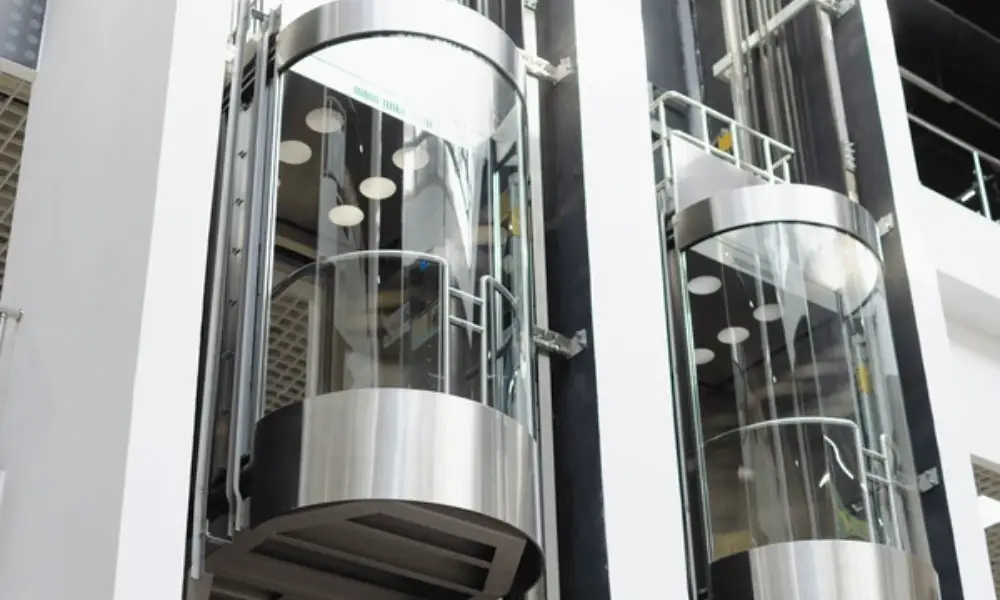
Pneumatic elevators operate on a fundamentally different principle from traction or hydraulic systems: the car travels inside a sealed polycarbonate tube, and movement is controlled by creating a differential in air pressure above and below the car. Ascending requires reducing pressure above the car; descending is controlled by releasing the pressure differential gradually.
- Zero pit. Zero overhead structure. Zero shaft construction required. The pneumatic system is the only residential elevator technology that can be installed without any pre-existing hoistway making it uniquely suited to the retrofit market.
- Damascus retrofit opportunity: thousands of older residential buildings across the city were constructed without elevator infrastructure. Pneumatic systems open this entire market segment without the structural intervention that a conventional traction or hydraulic installation would demand.
- Capacity consideration: pneumatic elevators are typically rated for 1–3 persons (up to approximately 250 kg). They are best positioned as accessibility upgrades, convenience lifts for elderly residents, or design features in luxury villa renovations rather than as primary vertical transport for high-density residential buildings.
- The transparent polycarbonate tube is a genuine design statement. Several luxury Damascus villa renovation projects have used pneumatic elevators as a visual centrepiece, visible from adjacent living spaces.
5. Home Elevators (Residential Lift) :Bespoke for Villas and Duplexes
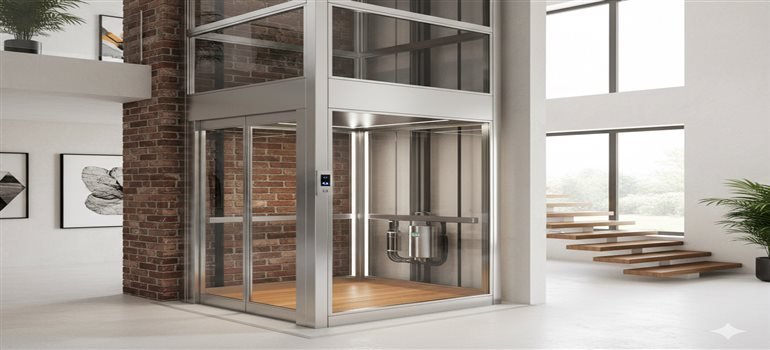
Home elevators are purpose-engineered for single-family residential use designed from the outset for the specific demands of a private villa, townhouse, or duplex rather than adapted from commercial elevator platforms. The result is a product that integrates more naturally with residential architecture, operates more quietly, and offers a wider range of aesthetic customisation than any commercial-grade alternative.
- Rated load range: 250–320 kg. Drive system: low-noise electric motor (traction or screw-drive). Travel height: typically 2–4 floors.
- Fully customisable cabin finishes: solid wood panelling, brushed stainless steel, frameless glass, or bespoke combinations designed to complement the specific interior scheme of the property.
- Accessibility compliance built in: door-opening widths, control panel heights, and audio floor announcements are all configurable to meet the requirements of elderly residents or those with mobility impairments without requiring after-market modifications.
- Hard System’s typical installation timeline for a villa home elevator project: 10–14 working days from site-ready date, including commissioning and safety certification handover.
Key Technical Specifications to Compare Across All Elevator Types
Once elevator type has been selected in principle, the next step is specifying the system correctly. The following four areas account for the majority of specification decisions and have the most significant impact on long-term performance and cost.
Load Capacity and Speed
- Standard residential range: 320–630 kg / 0.5–1.0 m/s. For high-density buildings with large apartment counts or where the elevator serves both residents and service deliveries, moving to an 800–1000 kg rated car will reduce wait times and extend equipment life by reducing the frequency of near-capacity loads.
- Speed matters more than it appears in the specification sheet. In a 10-floor building, the difference between 1.0 m/s and 1.6 m/s translates to a meaningful improvement in average wait time during morning and evening peak hours directly affecting resident satisfaction scores.
- Syrian building code establishes baseline requirements, but European EN 81 standards go further in several areas particularly around safety system redundancy, door force limits, and trapped-person rescue protocols. Hard System specifies to EN 81 as a minimum on all projects, ensuring Damascus buildings meet international benchmarks.
- Hard System provides full technical spec sheets and load-analysis reports on request. No hidden surprises at the sign-off stage.
Power Backup and UPS Systems : The Critical Damascus Requirement
In most global markets, elevator power backup is an optional upgrade. In Damascus, it is an operational necessity. Syria’s electricity grid experiences regular load-shedding events periods of planned or unplanned outage that can last from minutes to several hours. For elevator passengers, an outage without backup means entrapment until power is restored or an engineer arrives.
- ARD (Automatic Rescue Device): a battery-powered module that, on detecting mains failure, automatically drives the elevator car to the nearest floor landing and opens the doors allowing passengers to exit without assistance. ARD eliminates the entrapment risk entirely, provided the battery is correctly sized and maintained.
- UPS specification: batteries should be sized to deliver a minimum of 2–3 full rescue cycles per outage event. Hard System evaluates sealed lead-acid (lower cost, proven technology) and lithium-ion (lighter, longer cycle life, faster recharge) options for each project based on the building’s outage frequency profile.
- Hard System installs and commissions ARD + UPS packages as a de-facto standard on all Damascus residential projects not as an optional line item.
Energy Efficiency Ratings :Reducing Running Costs
- VFD (Variable Frequency Drive): soft-start technology that ramps motor speed up and down smoothly rather than switching at full voltage. This reduces peak motor draw, extends motor and mechanical component life, and cuts energy consumption by up to 40% compared with direct-on-line starting.
- LED cabin lighting with motion-sensing standby: individually modest, but cumulative across a building’s lifetime particularly relevant in high-occupancy buildings where the cabin lighting runs continuously.
- Long-term ROI framing: the energy savings generated by a regenerative traction drive combined with VFD control over a 15-year operating life can offset a meaningful proportion of the original installation investment. Hard System can provide project-specific ROI modelling on request.
- Post-installation energy audit: Hard System benchmarks actual energy consumption against the projected figures from the design phase after the first three months of operation, flags anomalies, and adjusts control parameters where required.
Safety Systems and Compliance Standards
- Core safety devices required on every residential installation: overload sensor (prevents departure above rated load), bi-directional speed governor (triggers emergency braking in both directions), buffer system (absorbs kinetic energy at extreme limits of travel), emergency intercom (direct communication from the car), and infrared door curtain (prevents door closure against an obstruction).
- EN 81-20 governs the design and installation of new passenger lifts. EN 81-50 covers the testing and examination of safety components. Both standards are explained to building owners in plain language by Hard System’s engineers during the consultation phase.
- Syrian regulatory compliance: the Ministry of Housing permit process requires technical file submission, a site inspection, and certificate issuance before the elevator can be handed over for use. Hard System manages the entire permit lifecycle from application preparation to inspection scheduling as part of the project scope.
- Fire service mode (Firefighter Elevator per EN 81-72) is required for buildings above 6 floors and allows emergency services to take manual control of the elevator during a fire event. Hard System configures this as standard for all qualifying Damascus projects.
Choosing the Right Elevator Type for Your Damascus Building
The Decision Matrix Match Elevator Type to Building Profile
- 2–4 floors / villa or small apartment building: Hydraulic elevator or Home Elevator. Simple mechanism, cost-effective installation, minimal structural impact, no machine room required.
- 5–8 floors / mid-rise residential: MRL Traction elevator. Space efficiency, modern performance, competitive lifetime cost, no machine room.
- 9–15+ floors / high-rise residential: Gearless Traction elevator. Speed, reliability, energy regeneration, full safety system depth, and the ability to serve high-traffic demand during peak hours.
- Retrofit / existing building without a pre-built shaft: Pneumatic (vacuum) elevator for shaft-free installation. Slim-profile MRL units can be considered where an existing hoistway is present but undersized for conventional traction equipment.
Damascus-Specific Climate and Infrastructure Considerations
- Temperature: Damascus summer temperatures regularly exceed 38°C. All hydraulic fluid specifications and motor cooling designs supplied by Hard System are selected with this climate range in mind not European operating norms.
- Dust and air quality: Damascus’s air carries higher particulate loads than northern European environments. Cabin door seals and hoistway ventilation filters require more frequent inspection and replacement than the standard EN 81 maintenance schedule assumes. Hard System’s Damascus maintenance contracts reflect this adjusted frequency.
- Power grid reliability: regardless of elevator type, an ARD/UPS package is non-negotiable for any Damascus installation. Hard System does not offer installations without it.
- Seismic zone: Syria sits within a moderate seismic zone. Buffer and guide-rail anchoring specifications must receive structural engineer sign-off on each project. Hard System coordinates this review as part of the design phase.
Navigating Syrian Regulations and Permit Requirements
- Applicable local codes: Ministry of Housing Technical Instructions set the baseline for elevator installation in Syria, with additional overlay requirements applicable in the Damascus municipality. Hard System’s engineering team maintains current knowledge of both frameworks.
- Hard System manages the full permit lifecycle: application preparation, technical file submission, inspection scheduling, and certificate issuance. The building owner is kept informed at each stage but does not need to interact directly with the regulatory process.
- Project handover documentation package: every Hard System residential installation is delivered with a complete set of as-built drawings, test certificates, a maintenance logbook, and a user manual in Arabic and English where required.
- Why licensing matters: using an unlicensed elevator installer voids the building’s insurance coverage for elevator-related incidents, risks direct financial penalties, and creates long-term legal liability for the building owner or developer. The short-term cost saving from an unlicensed contractor is not a saving it is a deferred liability.
Hard System’s Residential Elevator Services in Damascus
Hard System operates as a full-cycle residential elevator company from the initial consultation through to ongoing maintenance and 24/7 emergency response. The following outlines what that means in practice for Damascus building owners and developers.
- Full-cycle service model: consultation and site assessment → engineering design and specification → equipment supply from verified manufacturers → installation and commissioning → safety certification and permit handover → structured ongoing maintenance.
- Brand partnerships and supplier relationships: Hard System maintains direct relationships with certified elevator equipment manufacturers, ensuring genuine spare parts availability and competitive lead times a critical advantage in the Syrian market where grey-market components can compromise safety and void warranties.
- Project portfolio: Hard System has completed residential elevator installations across Damascus, Damascus Countryside, and Rif Dimashq, spanning villa home elevators, mid-rise MRL traction systems, and high-rise gearless traction installations. Case studies are available on request.
- 15+ years of operational presence in the Syrian market. 24/7 emergency call-out service available for all elevators under a Hard System maintenance contract because entrapments do not observe business hours.
Frequently Asked Questions : Types of Elevators for Residential Buildings
The following questions represent the most common enquiries Hard System receives from Damascus building owners, developers, and property managers evaluating residential elevator options.
Which elevator type is most cost-effective for low-rise buildings?
Hydraulic elevators are ideal for buildings with 2–4 floors due to their low upfront cost and simple installation.
For buildings with 5–8 floors, MRL (Machine Room-Less) traction elevators offer better long-term value. While the initial investment is slightly higher, they provide lower energy consumption and reduced maintenance cycles.
How long does residential elevator installation take in Damascus?
Most standard projects are completed within 2–4 weeks. Key variables include shaft readiness, permit processing time with the Ministry of Housing, and equipment lead times. Hard System coordinates all phases to minimize delays.
Do I need a dedicated machine room?
No. Only traditional traction elevators require one. MRL traction, hydraulic, and pneumatic (vacuum) systems eliminate this requirement freeing up valuable floor area for the developer or building owner.
What happens to the elevator during a power cut?
Hard System installs an ARD (Automatic Rescue Device) + UPS package as standard on all Damascus residential projects. During an outage, the system automatically drives the car to the nearest landing and opens the doors, allowing passengers to exit safely without manual intervention.
How often should a residential elevator be serviced?
Following EN 81 guidance, we recommend a structured maintenance contract covering three levels:
Monthly: Visual checks and lubrication.
Quarterly: Full mechanical and electrical inspections.
Annually: A comprehensive safety audit.
Can an elevator be installed in an existing building without a shaft?
Yes. Pneumatic (vacuum) elevators require no pre-built shaft, pit, or overhead machine room making them ideal for older Damascus buildings. Slim-profile MRL units can also be retrofitted in many existing hoistways where dimensions permit.
Which elevator type is best for a Damascus villa?
A home elevator (residential lift) or a hydraulic elevator is the most common choice for villas of 2–4 floors. Both options support fully customizable cabin finishes such as wood paneling, brushed steel, or frameless glass to complement luxury Damascus interiors.
Get Your Free Residential Elevator Consultation from Hard System Today
Choosing the right elevator type is a decision that will affect your building’s safety record, energy costs, and tenant experience for the next two to three decades. It is worth getting right from the start and that begins with an accurate assessment of your specific building, not a generic product recommendation.
Hard System’s Damascus-based engineers offer a no-obligation site assessment for any residential building in Damascus or the surrounding governorate. The assessment covers building profile, structural conditions, power infrastructure, regulatory requirements, and a clear recommendation with transparent pricing before any commitment is made.
Ready to Find the Right Elevator for Your Building?
contact us now ! Hard System’s engineers are based in Damascus and ready to assess your project free of charge.